Social Wall
  Feed Analytics

When it comes to building trust online, reviews can make or break your business.
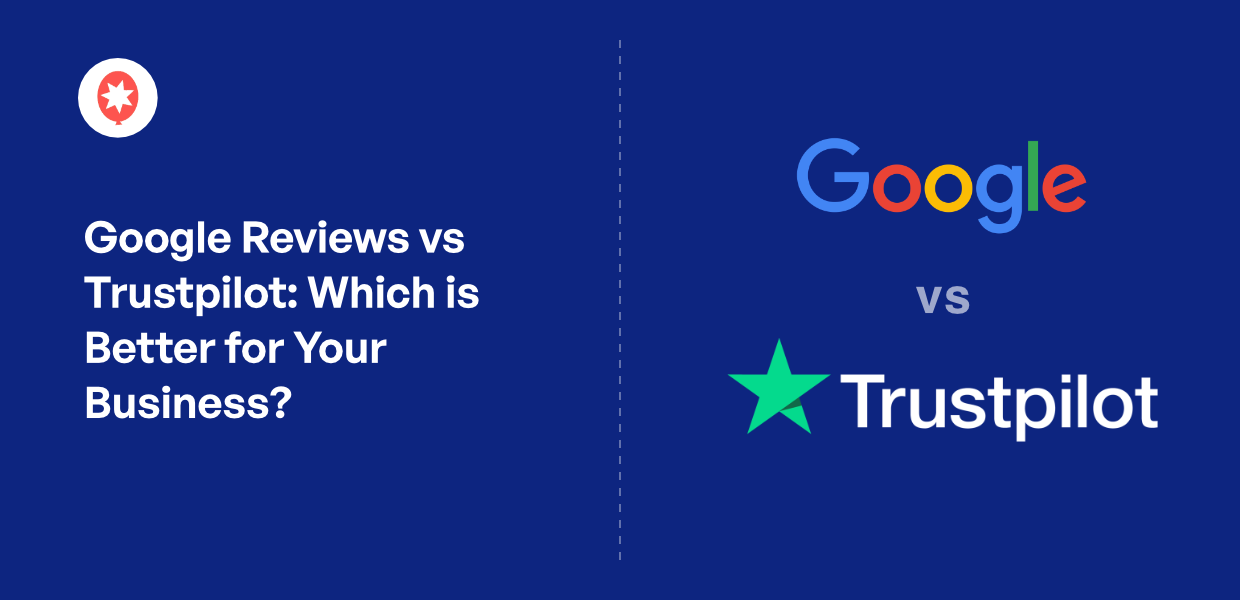
I’ve spent years helping business owners figure out the best ways to collect and showcase customer feedback, and one question keeps coming up: Google Reviews or Trustpilot?
I know how overwhelming it feels to compare Google Reviews vs Trustpilot when you just want to know which is better for your business.
Both platforms have real strengths. But choosing the wrong one for your business can mean missed opportunities, lower conversions, and a reputation that doesn’t work as hard as it should.
I have tested both of these review systems on multiple projects to see which one actually drives more engagement and sales.
In this guide, I will share exactly what I found so you can easily pick the perfect option for your store.
Which Is Better: Google Reviews or Trustpilot?
Google Reviews wins for local and service businesses that rely on search visibility. Trustpilot wins for ecommerce brands and SaaS companies where third-party credibility drives conversions. For best results, you can focus on one platform at first before expanding to the other.
If customers find you by searching on Google, such as a plumber, dentist, or local retailer, Google Reviews is your priority.
But if you sell online or run a SaaS product where customers compare you to competitors before landing on your site, Trustpilot provides the credibility badge that closes deals.
A 2025 study by Trustpilot and London Research found that ads featuring Trustpilot star ratings drove 57% higher click-through rates than identical ads without them.
| Feature | Google Reviews | Trustpilot |
|---|---|---|
| Affects local search ranking? | ✅ Directly | ⚠️ Indirectly via rich snippets |
| Customers find it without visiting your site? | ✅ Google Maps & Search | ✅ Trustpilot.com profile |
| Reviews update automatically on your website? | ❌ Requires a plugin | ❌ Requires a plugin |
| Free to collect reviews? | ✅ Completely free, no limits | ⚠️ Free tier (up to 100 manual invitations/month). Automated requests start at ~$259/mo |
| Can you respond to reviews? | ✅ Yes | ✅ Yes (more tools on paid plans) |
| Best for | Local & service businesses | Ecommerce, SaaS, B2B |
If you checked more ✅ boxes under Google, that’s your starting point. On the other hand, if Trustpilot’s strengths match your business model, that’s your anchor platform.
And if you ticked both columns heavily, keep reading, because you don’t have to pick just one.
What Google Reviews Does Well
Google Reviews has one advantage no other platform can match: it feeds directly into how Google ranks local businesses in search.
When someone types “emergency plumber near me” or “best dentist in Chicago,” Google pulls up a map with three businesses at the top.
Roughly 46% of all Google searches have local intent, meaning the person is looking for something nearby.
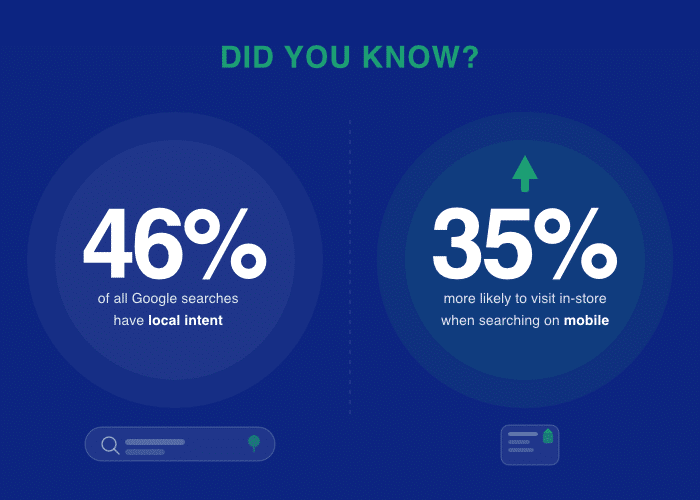
That is a massive share of search traffic that Google Reviews directly influences. Your review count and star rating work as a ranking signal every single day.
Here is a quick summary of where Google Reviews stands out:
- Zero Cost: Collecting, responding to, and displaying reviews on Google’s own surfaces is completely free
- Local Search Ranking: More reviews and higher ratings improve your placement in Google Maps and help you reach more people
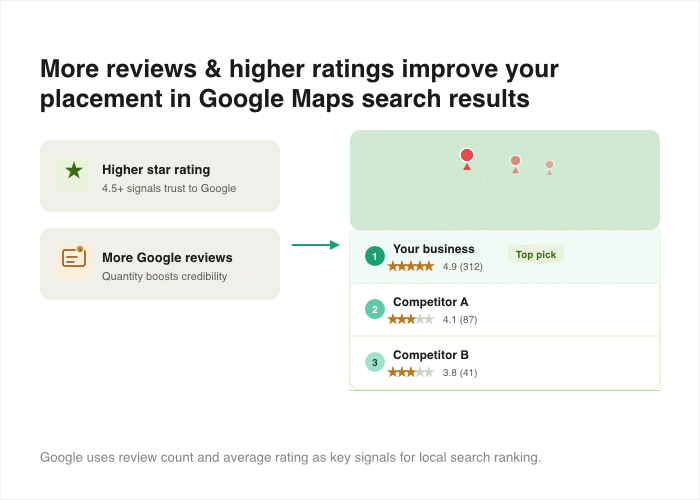
- Consumer Trust in Service Industries: High star ratings in search results drive more clicks and more calls, especially for plumbers, dentists, salons, and restaurants
All of this lives on your Google Business Profile, a free listing you claim and manage through Google. If you haven’t claimed yours yet, that is your first step.
Every review your customers leave goes straight to work for your local visibility.
The good news is, if your customers are already leaving you Google Reviews, you’re sitting on a local SEO asset you may not be fully using.
You can even show Google reviews on your website so that proof reaches visitors who never check your Google listing directly.
What Trustpilot Does Well
Trustpilot does something Google Reviews cannot: it signals trust to customers actively comparing vendors, not just searching locally.
Google Reviews tells people “others near you have used this business.”
Trustpilot tells them “this brand has been vetted by a neutral third-party platform.”
That distinction matters most when your customer is weighing three or four options before clicking the buy button.
While Trustpilot isn’t as popular as Google, it’s still massive, hosting over 350 million reviews across 1.3 million businesses worldwide.
It holds particular strength in international and B2B markets, especially in Europe, where buyer recognition of the Trustpilot badge is high.
Google Ads seller ratings. Any business with 100 or more Trustpilot reviews and an aggregate score of 3.5 stars or higher can have its star rating appear directly inside Google Shopping ads as Google Seller Ratings.
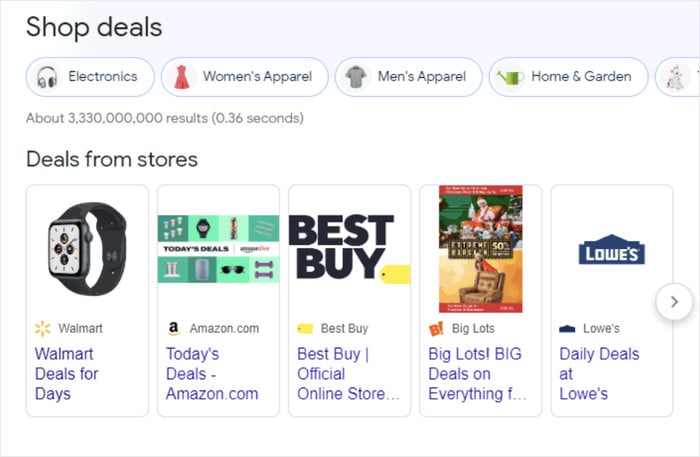
A 2025 study by Trustpilot and London Research found that ads featuring Trustpilot stars drove 57% higher click-through rates than the same ads without them, even when the star rating and review count were identical. Google Reviews do not qualify for this program.
Once you collect Trustpilot reviews, you’re not limited to displaying them on Trustpilot’s site. You can embed them directly on your WordPress site so that credibility shows up where visitors make decisions.
Pricing. Trustpilot’s free plan covers the basics: a public profile, up to 100 manual review invitations per month, and the ability to respond to reviews.
Automated invitation sequences, detailed analytics, and ad removal from your Trustpilot profile require a paid plan.
The Plus tier starts around $259 per month per domain. Premium plans run $900 or more per month. Pricing varies by business size, so check Trustpilot’s current pricing page for exact figures before budgeting.
You can embed Trustpilot reviews directly on your WordPress site so that credibility shows up where your visitors actually make decisions.
Is Trustpilot Legitimate?
Yes. Trustpilot is a publicly traded company listed on Nasdaq Copenhagen under the ticker TRST, which means its business practices are subject to regulatory oversight and public reporting. It’s not owned by or affiliated with any of the brands it reviews, which is the basis of its credibility claim.
The platform hosts more than 350 million reviews across 1.3 million businesses worldwide. It uses automated fraud detection to identify suspicious review patterns, and its reporting system lets both businesses and consumers flag reviews that violate its guidelines.
One fair caveat: Trustpilot’s paid plans give businesses more tools to manage their profile, including the ability to remove ads from their Trustpilot page. Some consumers find this model uncomfortable.
But the review content itself cannot be edited by the business, and verified-purchase badges distinguish invited reviews from organic ones. For a brand being researched by a skeptical buyer, a strong Trustpilot profile with verified reviews carries real weight.
The Real Weaknesses of Each Platform
No platform is perfect, and knowing the weak spots before you commit saves you a lot of frustration later. Here is an honest look at what each one gets wrong.
Google Reviews
- Removing unfair reviews is slow and unreliable. You can flag a review that violates Google’s policies, but getting reviews removed can take a lot of time and effort. Even clear spam can take weeks to investigate, and the outcome is never guaranteed.
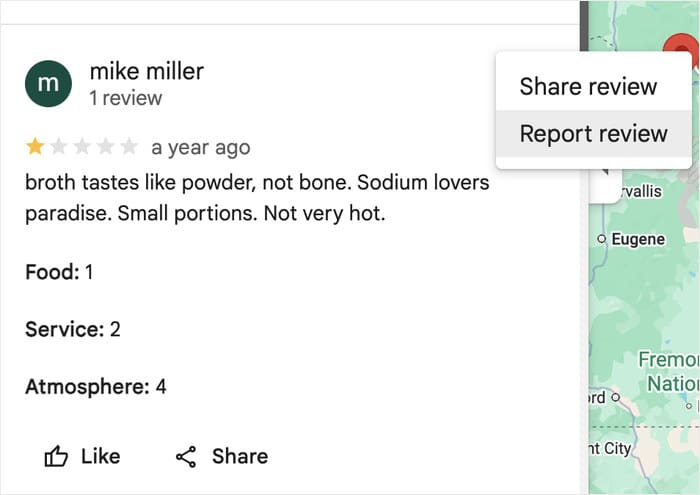
- There is no built-in review request system. Google does not send automated follow-up emails to your customers. You have to ask manually, which means your review volume depends entirely on how consistent you are.
- Low star ratings are very visible in search results. A 3.1-star rating shows up next to your business name every time someone searches for you. Recovery is possible, but it takes time and a sustained stream of new positive reviews.
Trustpilot
- The free tier is limited where it matters most. Automated review invitation emails and in-depth analytics both require a paid plan. If you want Trustpilot to work at scale, you will likely need to upgrade.
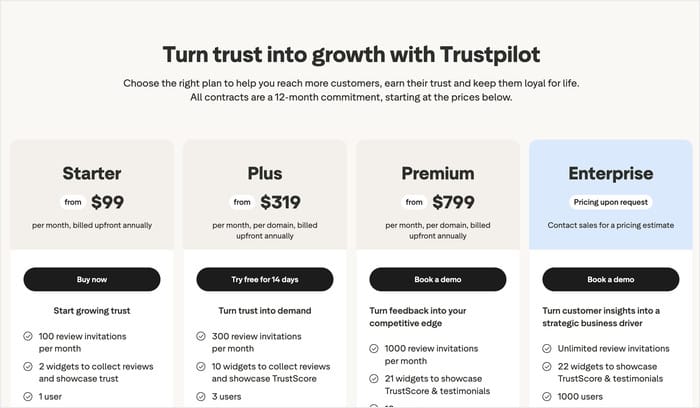
- Some consumers are skeptical of the business model. Trustpilot charges businesses for premium features, and some shoppers know this. A small segment treats a high Trustpilot score with more caution than they would a Google rating.
- It does not help much with purely local search discovery. If your customers find you by searching “near me” or browsing Google Maps, Trustpilot has very little influence on whether you show up.
Neither platform is perfect, but knowing the gaps means you can work around them.
Do You Actually Have to Choose?
Most businesses should have both Google Reviews and Trustpilot. The real question is where you put your energy first. Split your review-request effort equally, and you will build momentum on neither platform.
Here is a simple three-step framework to make this decision today:
- Identify where your customers find you. Do they search on Google Maps for a local service? Do they compare software tools on review aggregator sites? Do they click paid ads and need reassurance before they buy? Your answer tells you which platform drives the most value.
- Double down on that platform first. Focus your review requests, your responses, and your follow-up sequences on the platform that matches how customers discover you. Build real volume before splitting your effort.
- Set up the second platform for added credibility, not as a co-equal priority. A Trustpilot profile with 30 reviews supports a Google-first strategy. A Google Business Profile with a strong rating supports a Trustpilot-first strategy. Both help. One leads.
Once you have a clear priority, you will hit a problem both platforms share: your reviews are stuck on third-party sites.
They’re not on your homepage, product pages, or checkout. And those are the places where a hesitant buyer needs to see them.
How Does Review Collection Work on Each Platform?
Google Reviews: Share a direct link to your Google Business Profile review form, which you can generate from the Business Profile dashboard.
Customers need a Google account to leave a review. There’s no native automation on the free tier. Follow-up emails and text reminders are handled separately through your CRM or a third-party tool.
Trustpilot: The free plan gives you 100 invitation credits per month to send manually through the Trustpilot dashboard.
Paid plans add automated invitation sequences, so review requests go out automatically after a purchase or service interaction. Invited reviews receive a “verified” badge, which distinguishes them from organic reviews.
For disputing a fake or unfair review: On Google, you can flag the review for policy violations, but removal is slow and not guaranteed.
On Trustpilot, flagged reviews show a “Flagged” status while under investigation, so readers can see the dispute is in progress rather than seeing the review with no context.
Your reviews are on Google and Trustpilot. They should be on your website too.
Smash Balloon Reviews Feed Pro pulls live reviews from both platforms into a feed on your WordPress site. It updates automatically and takes about 5 minutes to set up.
Add Reviews to My SiteDisplay Both Platforms’ Reviews Directly on Your Website
Collecting reviews on Google and Trustpilot is only half the job.
Those reviews live on third-party sites, not on your homepage, product pages, or checkout flow, where they would actually influence a purchase decision.
With Smash Balloon Reviews Feed Pro, you can pull live Google and Trustpilot reviews into a feed on your WordPress site.
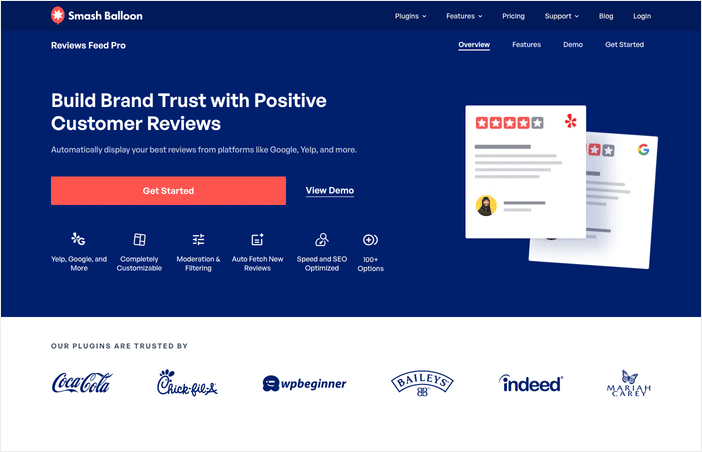
It updates automatically, requires no developer, and means the social proof you have worked to earn actually shows up where conversions happen.
You do not have to copy-paste reviews manually or maintain a static testimonials page. A live feed means every new review you earn goes to work on your site the same day it is posted.
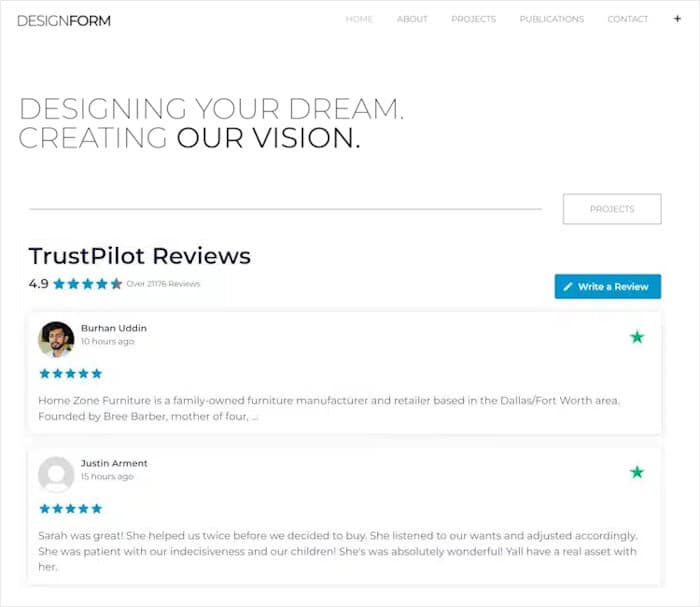
The good news is, setting this up takes only 5 minutes, and you can start leveraging your social proof to grow your sales.
Pro Tip: Want to learn how to embed review widgets using Reviews Feed Pro? Check out this step-by-step guide on how to embed social media review widgets.
Frequently Asked Questions
Does Trustpilot help with Google ranking?
Trustpilot reviews do not directly impact your Google local search ranking the way Google Reviews do. However, Trustpilot reviews can appear as rich snippet star ratings in search results, which can boost your visibility. For Google Shopping, Trustpilot seller ratings can also surface inside paid ads, giving you more views.
Can I show both Google and Trustpilot reviews on my website?
Yes, and doing both gives you the strongest possible on-site social proof. With Reviews Feed Pro, you can pull live reviews from Google and Trustpilot into a single feed and embed it anywhere on your WordPress site.
Which platform do customers trust more?
It depends on where the customer is in their decision. Consumers doing a local search trust Google Reviews because those ratings are familiar and appear right in the search results. Consumers evaluating an e-commerce brand or SaaS product tend to trust Trustpilot more because it is perceived as independent from the business selling to them.
Is Trustpilot free to use?
Yes, Trustpilot offers a free plan that includes a basic business profile, the ability to respond to reviews, and manual review invitations. But advanced features like automated email invitations, detailed analytics, and removing ads from your profile page can require a paid plan.
Start Displaying Your Reviews Where They Actually Convert
If your customers find you through local search, Google Reviews is your priority. If you sell online or run a SaaS product, Trustpilot is your anchor platform.
Either way, having both is stronger than having one.
But here’s the thing: all those reviews are still sitting on Google and Trustpilot when you could be doing more with them.
With Smash Balloon Reviews Feed Pro, you can pull live reviews from both Google and Trustpilot directly into your WordPress site.
You just connect your accounts, drop the feed where you want it, and your social proof starts working where your visitors actually make decisions.
Ready to add Trustpilot and Google reviews to your site? Get Smash Balloon Reviews Feed Pro today!