Social Wall
  Feed Analytics

Do you blank out every time you write a review response?
You’re not alone. 88% of consumers say they’d choose a business that responds to all reviews, yet most owners are still typing “Thanks so much!” and hoping for the best.
From my work at Smash Balloon helping businesses turn reviews into real trust signals, I’ve seen exactly what separates a response that wins customers from one that gets scrolled past.
You’ve collected great reviews on Google and Yelp, but if your responses feel copy-pasted and forgettable, you’re leaving real trust and real rankings on the table.
This guide fixes that. You’ll learn a simple four-part formula for writing responses that feel genuine, help your local SEO, and take less than two minutes each.
Plus, you’ll see how to make those hard-earned reviews visible on your own website instead of buried on a third-party platform.
- How to Respond to a Positive Review: The Short Answer
- Why Responding to Positive Reviews Actually Matters
- The 4-Part Formula for Writing a Perfect Review Response
- 15 Positive Review Response Examples (By Situation)
- 5 Mistakes That Make Your Review Responses Look Unprofessional
- How Long Should a Review Response Actually Be?
- How to Show Your Best Reviews on Your WordPress Site (So They Work for You 24/7)
- Start Responding to Reviews the Right Way Today
- More Online Marketing Guides and Tutorials
How to Respond to a Positive Review: The Short Answer
If you want the fast version, here it is.
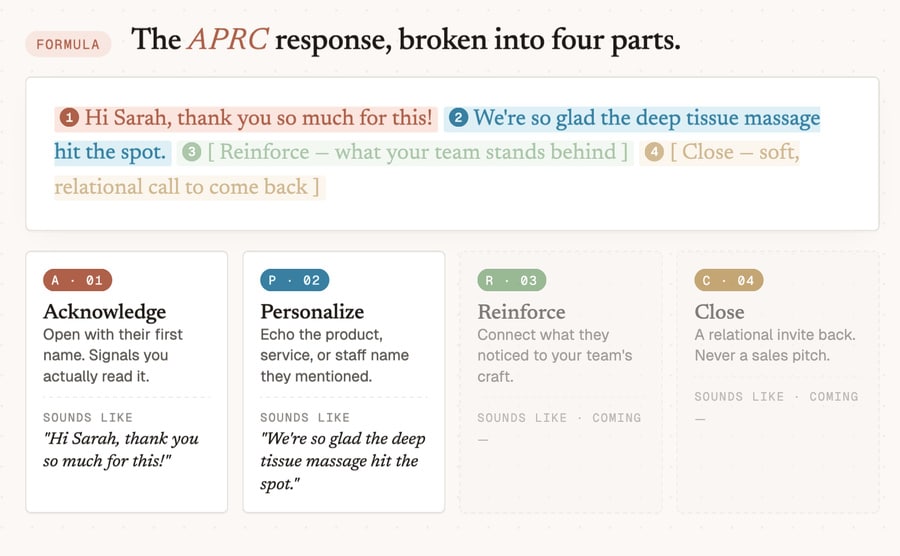
Use the APRC framework every time you write a review response:
- Acknowledge: Thank the reviewer by name
- Personalize: Reference the specific detail, product, or service they mentioned
- Reinforce: Echo their experience back in your own words (this is where your service keywords fit naturally)
- CTA: Close with a soft invitation to return or refer a friend
Four steps. That’s it. Once you know them, you can write a solid response in under two minutes.
Here’s what the difference looks like in practice:
Generic Response: “Thanks so much for the kind words! We really appreciate your support.”
Better Response: “Thank you, Sarah! We’re so glad your experience with our deep conditioning treatment left your hair feeling healthy. Our stylists work hard to make every visit feel personal, and it means a lot to hear that landed for you. We’d love to see you again soon, and if you have a friend who needs a little hair TLC, send them our way!”
The second response does four things the first one doesn’t: it uses Sarah’s name, mentions the exact service, reinforces the outcome she described, and ends with a reason to come back or send a referral.
It takes about 90 seconds to write once you know the formula.
The rest of this guide breaks down each step and shows you exactly what to write for every situation you’ll run into.
Why Responding to Positive Reviews Actually Matters
Maybe a thumbs-up emoji feels like enough. Here’s why it isn’t.
Every positive review is a live marketing asset sitting where real customers are making decisions.
When you respond, you turn a one-way compliment into a two-way conversation that the next reader can see. That next reader isn’t watching just what the reviewer said; they’re watching what you said back.
“When hotels start responding, they receive 12% more reviews and their ratings increase by an average of 0.12 stars.”
– Harvard Business Review
Show up regularly in your review comments, and Google reads that activity as a sign your business is active and engaged.
Response rates vary widely by industry, so there’s no single benchmark worth chasing. What matters is consistency.
Businesses that respond regularly send a signal to both Google and potential customers that someone is actually minding the store.
Think about what an unanswered positive review tells the next person reading your Google listing. Someone loved this business, and the business didn’t acknowledge it.
A response flips that message entirely: it tells the next reader, “We’re here, we’re listening, and we care about the people who walk through our door.”
The good news is, you don’t need to be a skilled writer to get this right. You just need a repeatable system.
The 4-Part Formula for Writing a Perfect Review Response
You already know the four letters: APRC. Now let’s break down exactly what to write at each step and why each one earns its place in the response.
Step 1: Acknowledge
Open by using the reviewer’s first name.
This signals you read their review personally rather than fired off an automated reply. It’s also one of the fastest ways to add warmth to a response that would otherwise feel canned.
Most readers scrolling your reviews will notice this immediately.
Sounds like: “Hi Sarah, thank you so much for this!”
Step 2: Personalize
Reference the specific product, service, or detail they mentioned in their review.
This is the step most businesses skip and it’s the most visible one to new readers comparing you to competitors. If they mentioned a staff member, name that person back. If they mentioned a product, name it too.
Sounds like: “We’re so glad the deep tissue massage hit the spot.”
Step 3: Reinforce
Echo their positive experience back in your own words.
This does two things: it makes the reviewer feel genuinely heard, and it naturally places your service keywords into the response.
You’re not inventing anything. You’re restating what they already said in a way that signals relevance to Google without looking like keyword stuffing.
Sounds like: “Providing a relaxing, therapeutic experience for every client is exactly what we’re here for.”
Step 4: Soft CTA
Close with a warm invitation to return, bring a friend, or try another service.
Don’t ask them to leave another review here. That reads as desperate and violates Google’s review guidelines. Keep the tone natural, like you’re wrapping up a conversation with someone you actually like.
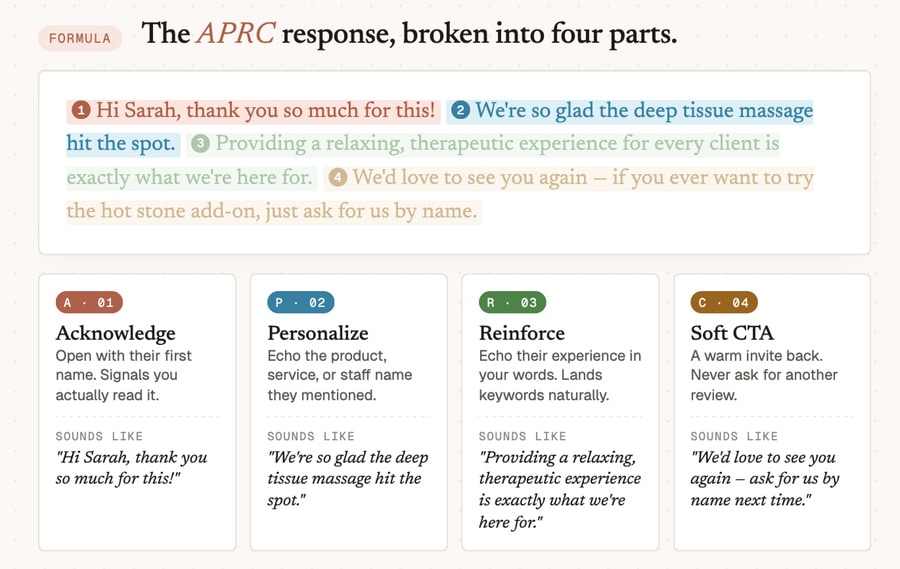
Sounds like: “We’d love to see you again, and if you ever want to try the hot stone add-on, just ask for us by name.”
The APRC formula works across Google, Yelp, Facebook, and TripAdvisor. The framework stays the same on every platform; only the tone shifts slightly.
Yelp skews a little more casual. TripAdvisor responses often benefit from a light travel or location reference.
Facebook responses can feel the most conversational of all since the audience already knows your brand.
Don’t worry if your first few responses feel a little stiff. After five or six, this becomes second nature.
15 Positive Review Response Examples (By Situation)
Reading the formula is one thing. Seeing it in action is another.
The examples below cover five situations you’ll run into most often. For each one, you’ll see a Generic Response and a Better Response side by side.
The contrast shows you exactly what to change and why it works.
Responding to a General 5-Star Review (No Specific Detail)
This is the hardest case. Someone writes, “Amazing! Highly recommend!” and you have nothing to personalize with. No product name, no staff mention, no specific detail at all.
The fix is simpler than you think. Use their name, reference your general service category, and close with a warm invitation. You’re adding the detail they left out.
Generic Response: “Thank you for the 5-star review! We appreciate your support.”
Better Response: “Hi Jamie, thank you so much for taking the time to leave this! We love hearing that your experience with us hit the mark.
Our whole team works hard to make every visit feel that way, and your kind words mean a lot. We hope to see you again soon!”
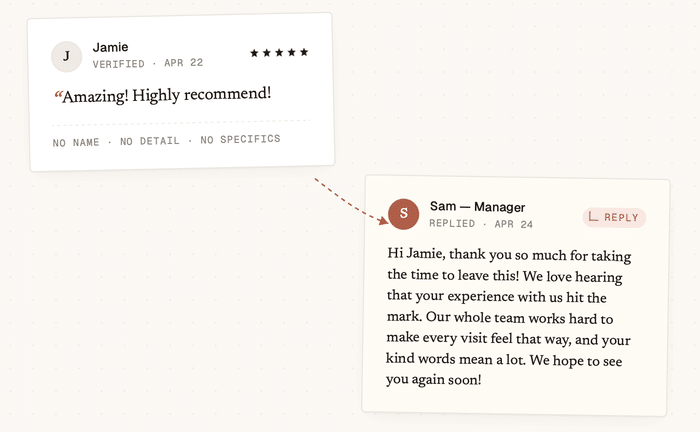
Using the name and referencing “every visit” makes the response feel personal even without specific details. The closing line gives the next reader a reason to picture coming back.
Generic Response: “Thanks for the review! Glad you enjoyed it.”
Better Response: “Hi Marcus, this made our day! We put a lot of care into every service we offer, and knowing it showed up for you means everything. If there’s ever anything we can do to make your next visit even better, just let us know. We’d love to have you back.”
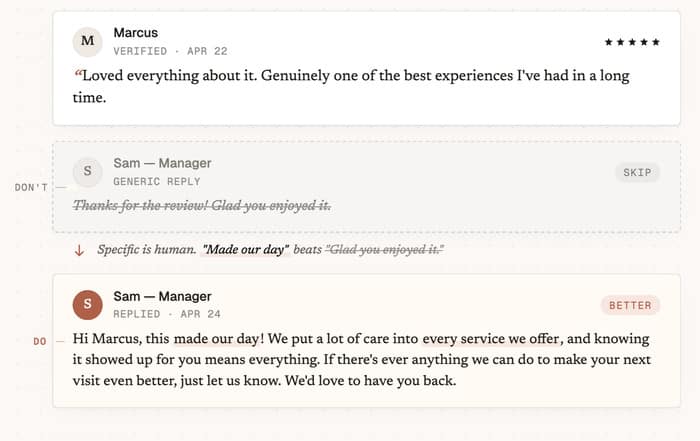
“Made our day” is specific and human. “Every service we offer” stays general without sounding hollow.
Generic Response: “We appreciate the kind words! Come back soon.”
Better Response: “Hi Priya, thank you for this wonderful review! We’re so glad you had a great experience with us. Reviews like yours remind our team why they love what they do. We look forward to seeing you again, and bring a friend next time!”
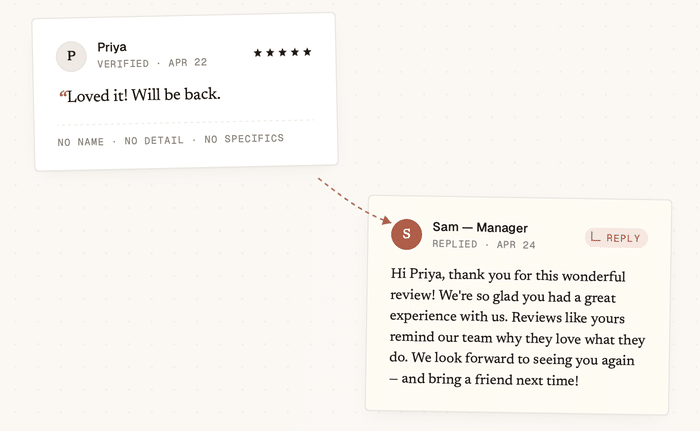
Connecting the review to the team’s motivation adds depth. The “bring a friend” line plants a referral seed without pushing.
When a Reviewer Mentions a Specific Employee by Name
When a customer names a team member, that moment is worth handling well.
Acknowledge the employee directly, validate the reviewer’s experience, and let your team culture come through in the response. This is exactly the kind of experience you train for, and the response should say so.
One practical tip: forward the review to the employee you mention. It costs nothing and builds real loyalty. When staff see their names in positive reviews and feel recognized, they remember it.
Generic Response: “Thank you for the review! We’re glad you had a great visit.”
Better Response: “Hi Diane, thank you so much for calling out Maria by name! She is a wonderful part of our team, and this is exactly the kind of care and attention we train for. We’ll make sure she sees your kind words. We hope to see you back at [Salon Name] very soon!”
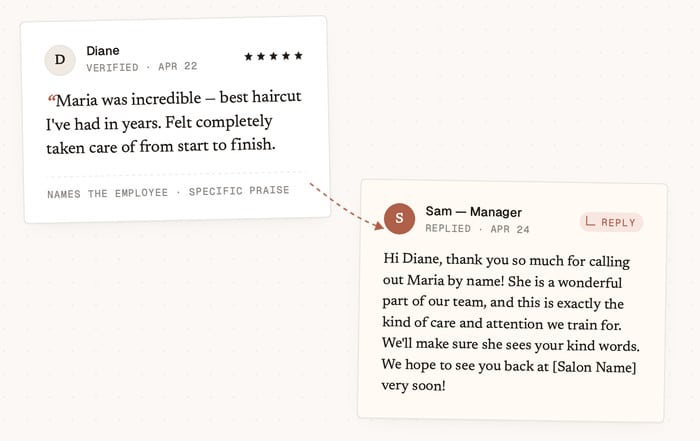
Naming the employee back and saying “this is what we train for” reinforces team culture in a way that reads naturally, not like a corporate script.
Generic Response: “Thanks! We’ll pass along your kind words.”
Better Response: “Hi Carlos, we’re so happy Dr. Patel made your visit feel comfortable and clear. She genuinely loves connecting with patients, and hearing that it showed means so much to all of us. We’ll share your words with her directly. See you at your next appointment!”
The phrase “genuinely loves connecting” adds warmth without sounding rehearsed. It signals the employee cares, not just that they’re trained.
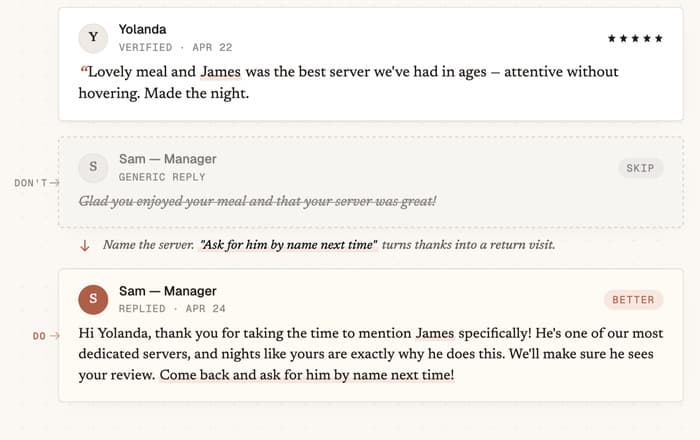
Generic Response: “Glad you enjoyed your meal and that your server was great!”
Better Response: “Hi Yolanda, thank you for taking the time to mention James specifically! He’s one of our most dedicated servers, and nights like yours are exactly why he does this. We’ll make sure he sees your review. Come back and ask for him by name next time!”
“Ask for him by name next time” turns the response into a return visit prompt that feels personal, not promotional.
When a Reviewer Mentions a Specific Product or Service
This is your best local SEO opportunity in any review response. When a customer names a specific product or service, echo that exact phrase back in your reply.
Google’s local algorithm picks up on service-relevant keywords in review responses.
Repeating “the smoked brisket” or “the roof inspection” signals that your business actually offers that specific thing. This is not keyword stuffing. You’re echoing the customer’s own words, which is entirely natural.
Generic Response: “Thank you! We’re so glad you enjoyed your meal.”
Better Response: “Hi Tom, we’re so glad the smoked brisket hit the spot! Our pitmaster starts the brisket at 4am every morning, so hearing that the work paid off really means a lot. We’d love to see you back at [Restaurant Name] for the next batch!”
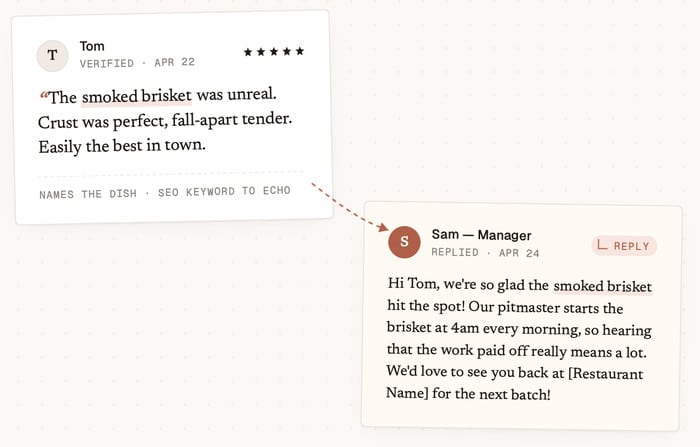
Repeating “smoked brisket” signals keyword relevance to Google and makes the response feel genuine, not templated.
Generic Response: “Thanks for the kind words! Happy to help.”
Better Response: “Hi Renee, thank you so much for trusting us with your roof inspection! We know that kind of project can feel stressful, and we’re glad our team made the process straightforward. If you ever need us again, we’re just a call away, and referrals from happy customers always mean the world to us.”
Echoing “roof inspection” adds local service relevance. The referral line is warm and genuinely useful.
Generic Response: “Glad you loved the product! Come back soon.”
Better Response: “Hi Jasmine, we’re thrilled you loved the lavender body scrub! It’s one of our most popular items, and it’s always great to hear when someone discovers it for the first time. We have a few new seasonal scents launching next month, so definitely check back in soon!”
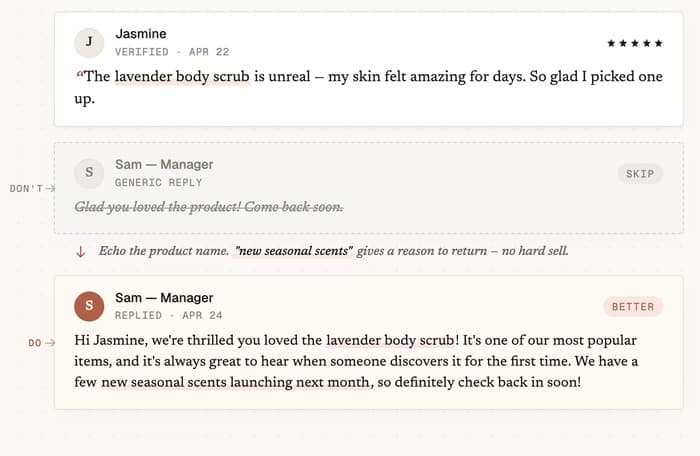
The product name repeats naturally. The “new scents” mention gives the reader a reason to return without sounding like an ad.
When a Reviewer Says They’ll Come Back
These are your warmest leads. Someone just told you they plan to return, which means your job is simple: make them feel welcome before they even walk back through the door.
Use the response to suggest a next step, a new service, or a seasonal option. Keep it casual. The best upsells do not read like upsells.
Generic Response: “Thanks! We hope to see you again soon.”
Better Response: “Hi Becca, we’d love to have you back! If you ever want to try the seasonal tasting menu on your next visit, just let your server know when you arrive. We can’t wait to see you again at [Restaurant Name].”
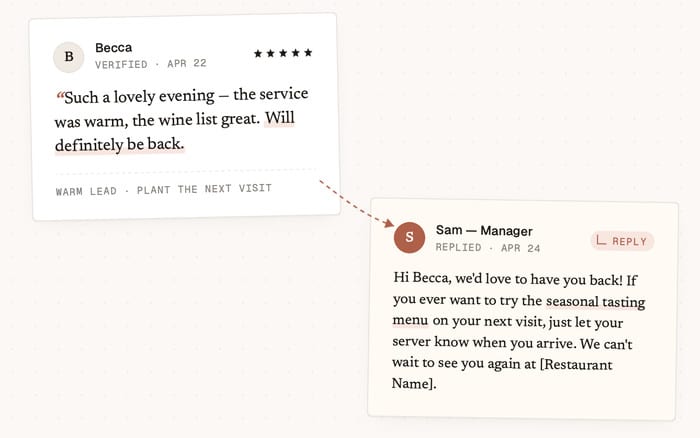
A specific suggestion beats a vague invitation every time.
Generic Response: “We look forward to seeing you again!”
Better Response: “Hi Derek, we’re so glad you’re planning to come back! Next time, ask about our loyalty program if you haven’t already. It’s a small thank-you from us to customers who keep returning. See you soon!”
The loyalty program mention serves the customer and the business at the same time, without any hard sell.
Generic Response: “Can’t wait to see you! Thanks again.”
Better Response: “Hi Elena, we’re already looking forward to your next visit! If you’d like to try the deep conditioning treatment you mentioned eyeing last time, just book online and add it as an upgrade when you schedule. We’ll make sure it’s ready for you.”
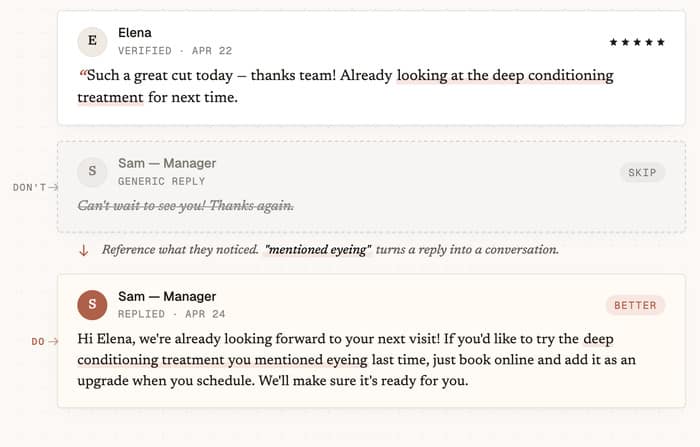
Referencing something they “mentioned eyeing” makes the response feel like a real conversation, not a form letter.
Responding to a One-Word or Emoji-Only Review
Most review guides skip this scenario entirely. They shouldn’t, because it happens all the time.
Someone drops “Incredible!” or pastes five star emojis, and you stare at the screen wondering what to type back. The answer is the same as always. Use their name, add a warm comment about your team or your work, and close simply.
Generic Response: “Thanks so much!”
Better Response: “Hi Alex, that made us smile! We put a lot of heart into what we do here, and one word like that tells us it’s coming through. Thank you for taking a moment to share it, and we hope to see you again soon.”
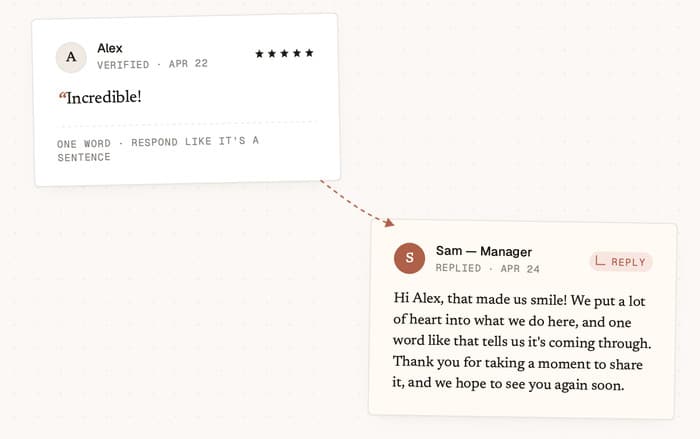
A one-word review does not need a long response. It just needs a real one.
Generic Response: “We appreciate it!”
Better Response: “Hi Sam, thank you for the stars! It genuinely means a lot to our team to know you had a great experience. Come back anytime, and bring someone you think we’d love to meet.”
Even a minimal review deserves a real response. Every person who reads your listing will see that you care about every customer, not just the ones who write essays.
5 Mistakes That Make Your Review Responses Look Unprofessional
Even with a solid formula in hand, a few common habits can quietly undermine your responses.
These five mistakes show up constantly across Google, Yelp, and Facebook listings, and most business owners do not realize they’re making them.
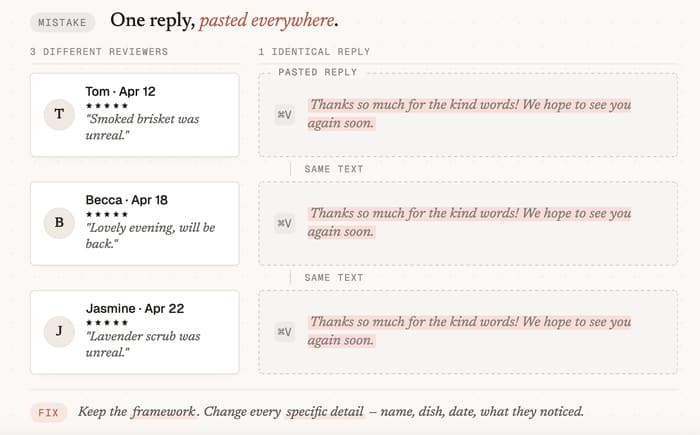
- Copy-pasting the same response to every review.
Platform algorithms detect identical response text, and savvy customers who scroll your review history will notice too.
When every reply looks the same, it tells readers that nobody actually read the reviews.
Fix: Use the same framework every time, but change every specific detail.
- Making the response about your business instead of the reviewer.
“We pride ourselves on exceptional service” is a press release, not a thank-you. It pulls focus away from the customer who took time to write something kind.
Fix: Keep the spotlight on what the reviewer specifically experienced.
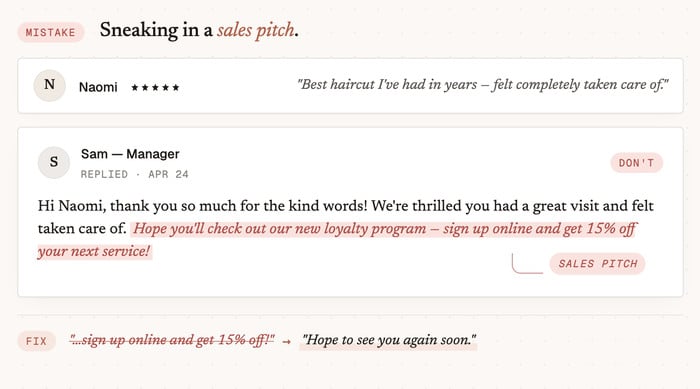
- Adding a promotional pitch.
“Hope you’ll check out our new loyalty program!” turns a genuine moment of goodwill into a sales opportunity, and readers feel it immediately.
It makes your response feel transactional instead of grateful.
Fix: if you want a soft call to action, keep it related, like “hope to see you again,” not commercial.
- Responding days or weeks late.
The reviewer has already moved on, but the timestamp gap is visible to every future reader who finds your listing.
A slow response signals that reviews are not a priority for your business.
Fix: Set a weekly 15-minute calendar block and batch your responses all at once.
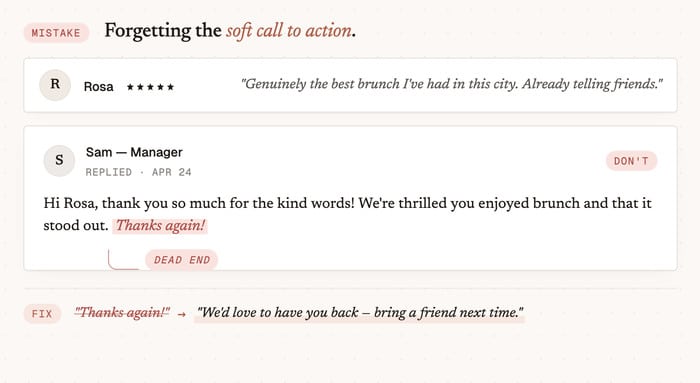
- Skipping the soft call to action entirely.
Every positive review is a warm lead, and ending with “Thanks again!” leaves that lead on the table. The reviewer is already a fan, so give them something to do next.
Fix: Close with one sentence that invites them back or encourages them to bring a friend.
The good news is, none of these mistakes are hard to fix. You just need to notice them. The APRC formula handles all five automatically.
How Long Should a Review Response Actually Be?
Match the length of your response to the effort the reviewer put in. That’s the rule. A one-word review gets one or two sentences back. A detailed paragraph earns a short paragraph in return.
Use this table as your quick reference:
| Reviewer’s input | Your ideal response length |
|---|---|
| One word or emoji only | 1-2 sentences |
| 1-2 short sentences | 2-3 sentences |
| 3+ sentences or detailed story | 4-6 sentences |
| Long, detailed paragraph | Short paragraph (5-7 sentences max) |
A warm, specific two-sentence response beats a generic five-sentence one every single time. Longer is not better. More specific is better.
Don’t overthink the length. If you’ve hit all four parts of the APRC formula, you’re done. Stop writing.
How to Show Your Best Reviews on Your WordPress Site (So They Work for You 24/7)
You’ve put real effort into crafting review responses that feel personal and build trust.
But here’s the problem: 95% of your website visitors will never see them because those reviews are buried on Google or Yelp, and most people never visit your listing directly.
The fix is to bring those reviews to your website, where your traffic already is.
Smash Balloon’s Reviews Feed Pro pulls your reviews from the platforms where customers write them and displays them on your own website, automatically.
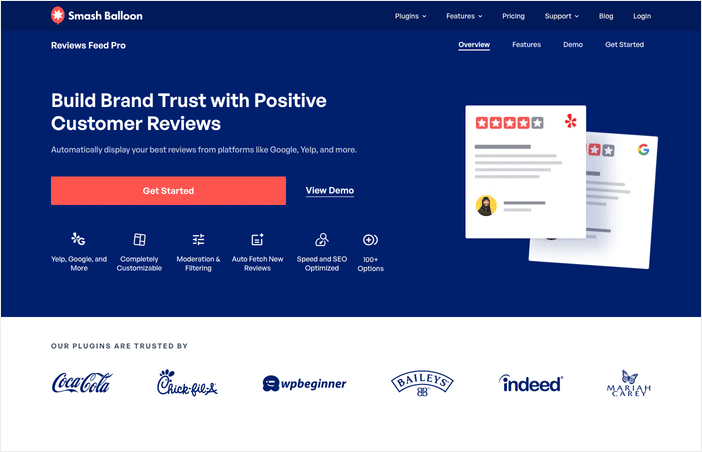
Here’s what it does:
- Automatically pulls reviews from trusted sites: Google, Yelp, Facebook, Trustpilot, TripAdvisor, and more.
- Lets you filter by star rating so only your best reviews show on your site.
- Updates in real time. New reviews appear on your site without any extra work from you.
- Matches your branding right away and comes with lots of templates and design options.
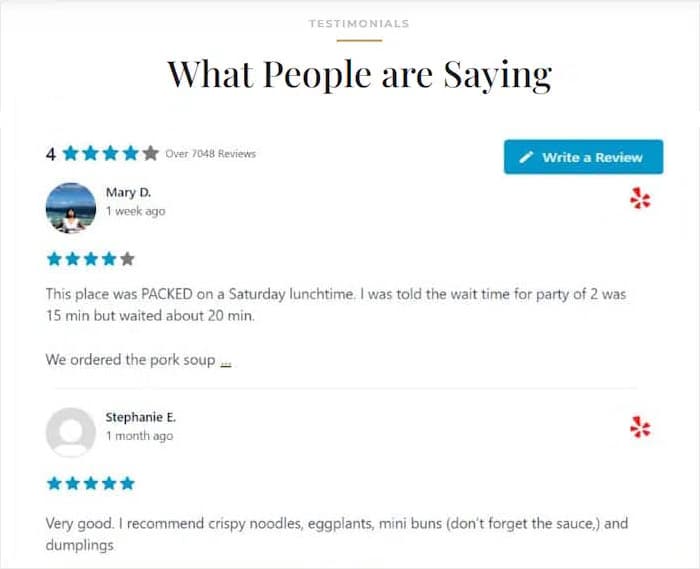
Visitors who read full, detailed reviews on your website are far more likely to contact you or make a purchase than visitors who only see a small star-rating widget.
Don’t let your best social proof stay buried, and get Reviews Feed Pro today!
To see this tool in action, check out our step-by-step guide on how to embed social media review widgets.
Start Responding to Reviews the Right Way Today
You now have everything you need. The APRC formula gives you a four-step system: Acknowledge the reviewer, Personalize with a specific detail, Reinforce the value you delivered, and close with a soft Call to action.
It might feel a bit awkward with your first response. Write three tonight, and it will feel natural by number five.
The reviews are already there. Your responses will build trust, signal relevance to Google, and show every future customer that you actually care. All it takes is two minutes and a system that you now have.
Ready to put your best reviews in front of every visitor?
Try Reviews Feed Pro and display your reviews directly on your WordPress site.
Want help with negative reviews as well? Check out our guide on how to handle and respond to negative reviews online.
More Online Marketing Guides and Tutorials
- Social Proof Statistics That Will Change How You Think About Reviews
- How to Use YouTube for Your Business (Complete Guide)
- Best Customer Review Plugins for WordPress [Compared]
- How to Use Google Reviews to Get More Customers
- How to Reduce WooCommerce Cart Abandonment: Proven Strategies