Social Wall
  Feed Analytics

You post something you’re proud of. Good photo, solid caption, even remembered to add hashtags.
Then 45 minutes later: 14 likes, 2 comments from your mom, and reach that somehow went backwards.
If that sounds familiar, you’re not imagining it. Instagram reach has gotten harder to build over the past few years, and the reason most people struggle is that they’re still operating with a mental model of how the algorithm worked in 2019.
It doesn’t work that way anymore.
I’ve spent a lot of time studying how Instagram distributes content in 2026, and more importantly, testing what actually moves the needle for business accounts. The short version: the Instagram algorithm isn’t trying to punish you. It just rewards completely different things now than it used to.
Here’s what changed, how each part of Instagram ranks content today, and what to actually do about it.
In This Article
- How does the Instagram algorithm work in 2026?
- What changed in the Instagram algorithm in 2026
- Instagram has multiple algorithms, not just one
- The signals Instagram uses to rank your content
- What the algorithm rewards in 2026
- What kills your reach
- How to apply this to your business account
- Why your website is the one place the algorithm can't touch
- How to know if the algorithm is actually working for you
- FAQs on the Instagram Algorithm in 2026
- Does the Instagram algorithm punish you for posting too much?
- Do hashtags still matter in 2026?
- Can you reset the Instagram algorithm?
- Does using third-party scheduling tools hurt your reach?
- What type of content gets the most reach on Instagram in 2026?
- What does Instagram prioritize above everything else?
- Start working with the algorithm now
How does the Instagram algorithm work in 2026?
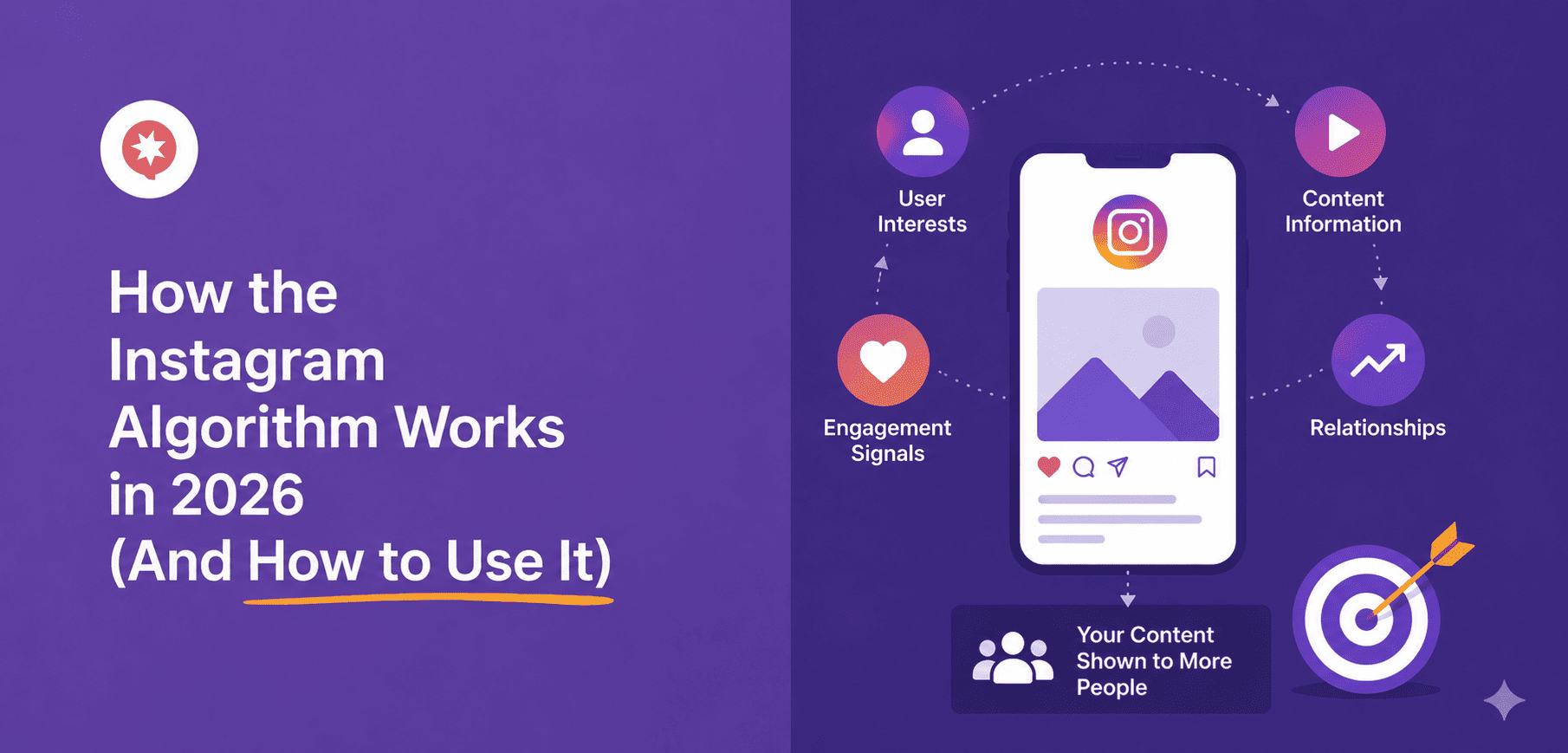
Instagram doesn’t use a single algorithm. It uses several separate systems, one for each surface: Feed, Reels, Stories, and Explore. Each surface has its own ranking signals and priorities. As of 2026, Instagram treats Views as its unified primary metric across all content formats, and has shifted from a social graph model to an interest graph model. That means your content can reach people who have never followed you if Instagram predicts they’ll engage with it.
What changed in the Instagram algorithm in 2026
A few things shifted meaningfully this year. The core algorithm mechanics (relationship signals, interest signals, recency) haven’t changed. But Instagram rolled out features and policy updates in 2026 that change what performing well actually looks like.
Views became the primary unified metric
Instagram announced that Views is now the primary metric it surfaces to creators across every format, including photos, carousels, and Reels.
Previously the platform used different engagement benchmarks per content type. The move to a single Views metric tells you clearly what the platform cares about most in 2026: how many people actually saw your content, not how many double-tapped it.
Trial Reels let you test before you commit
Instagram introduced Trial Reels, a feature that lets you test a Reel with non-followers before deciding whether to push it to your existing audience.
If the Reel earns strong watch time, shares, and replies with that new audience, you can then share it to your full following. If it underperforms, you can archive it before it affects your account’s overall signal.
Carousels now support up to 20 slides
Carousel posts expanded from 10 to 20 slides. Combined with the fact that carousels generate stronger sustained engagement than single images (every swipe counts as active viewing), this makes them a more powerful format than they were 12 months ago. More slides means more time spent in the post, which signals genuine interest to the algorithm.
You can now reset your suggested content
Instagram added a “Reset Suggested Content” option under Settings > Content Preferences. It clears your interest signals and gives you a fresh slate for what appears in your Explore and Reels feeds. It doesn’t affect your followers or your posting history.
As a creator, this tells you something worth knowing: the algorithm’s interest signals respond to behavior and can be deliberately shaped over time.
Instagram has multiple algorithms, not just one
Most guides talk about “the algorithm” like it’s one thing. It isn’t. Instagram uses separate ranking systems for each part of the app, and what works in one place doesn’t automatically carry over to another.
How the Feed algorithm ranks posts
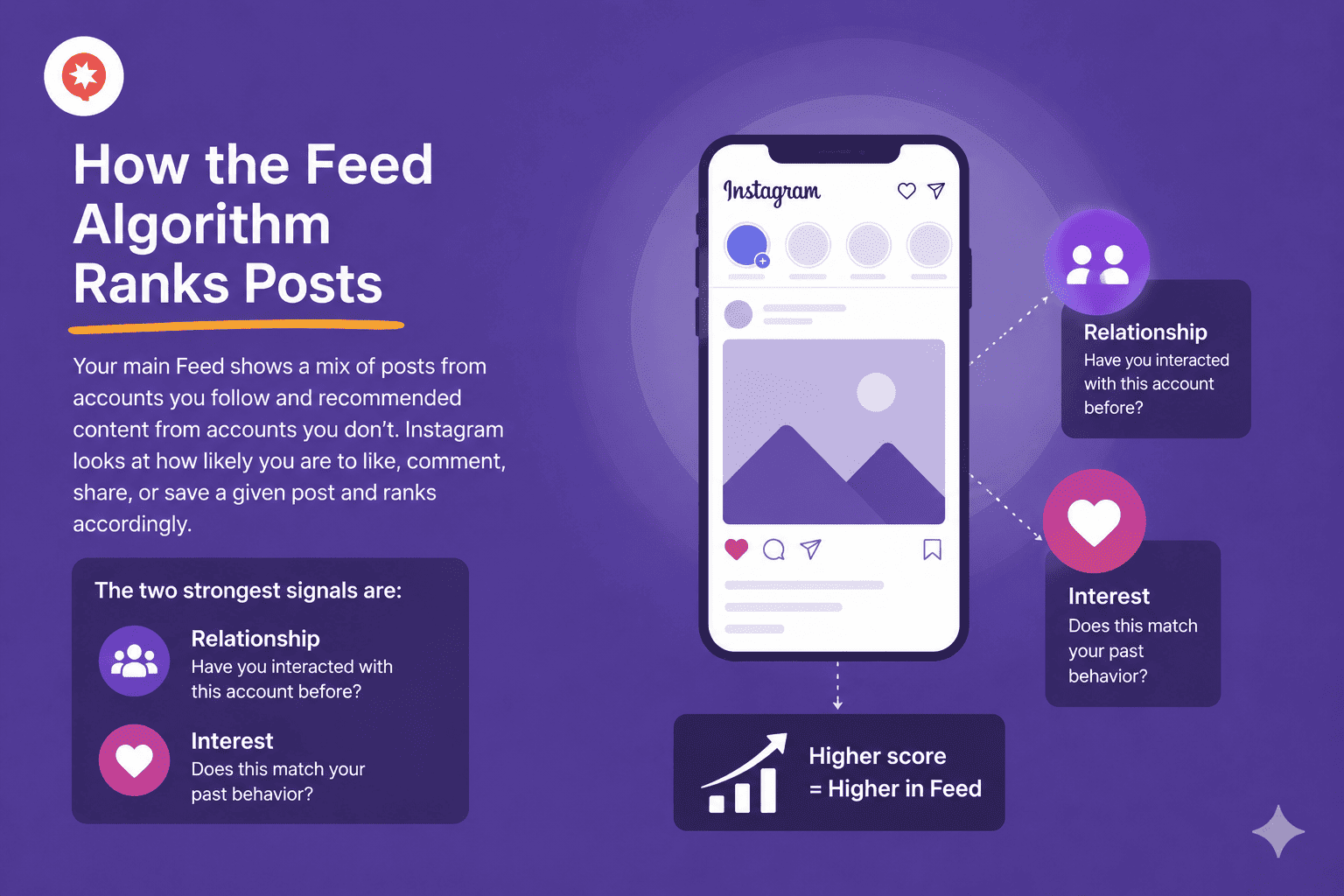
Your main Feed shows a mix of posts from social media accounts you follow and recommended content from accounts you don’t. Instagram looks at how likely you are to like, comment, share, or save a given post and ranks accordingly.
The two strongest signals are relationship (have you interacted with this account before?) and interest (does this match your past behavior?).
How Reels are ranked differently
Instagram reels reach the widest audience but have the highest bar to clear. The ranking signals lean heavily on watch behavior: completion rate, replays, and shares. A Reel that gets watched all the way through and then DM’d to a friend tells the algorithm something. One that gets swiped away in the first three seconds barely registers.
How Stories and Explore work
Stories are ranked by relationship. The accounts whose Stories appear first in your tray are the ones you engage with most consistently. Explore is pure interest graph: it surfaces content you haven’t seen before, which is why going viral on Explore can happen through accounts with a fraction of your following.
For businesses, Explore reach is a bonus. You can create conditions that invite it, but you can’t manufacture it.
The signals Instagram uses to rank your content
Relationship signals
Instagram tracks every interaction between you and another account: likes, comments, DMs, story replies, profile visits. If someone engages with your content consistently, Instagram treats that as a strong relationship and prioritizes your posts in their feed.
This is why engagement compounds. The accounts that show up reliably are the ones that have built a real back-and-forth with their audience over time.
Interest signals
Instagram builds an interest profile for every user based on what they’ve watched, liked, saved, and spent time on. When you post, Instagram predicts how well your content matches the interest profiles of your followers and potential new audiences. Niche accounts often outperform generalist ones for exactly this reason.
A focused account gives the algorithm a clear picture of who to show your content to.
Recency
Newer content gets distribution priority, but not in a simple “post more” way.
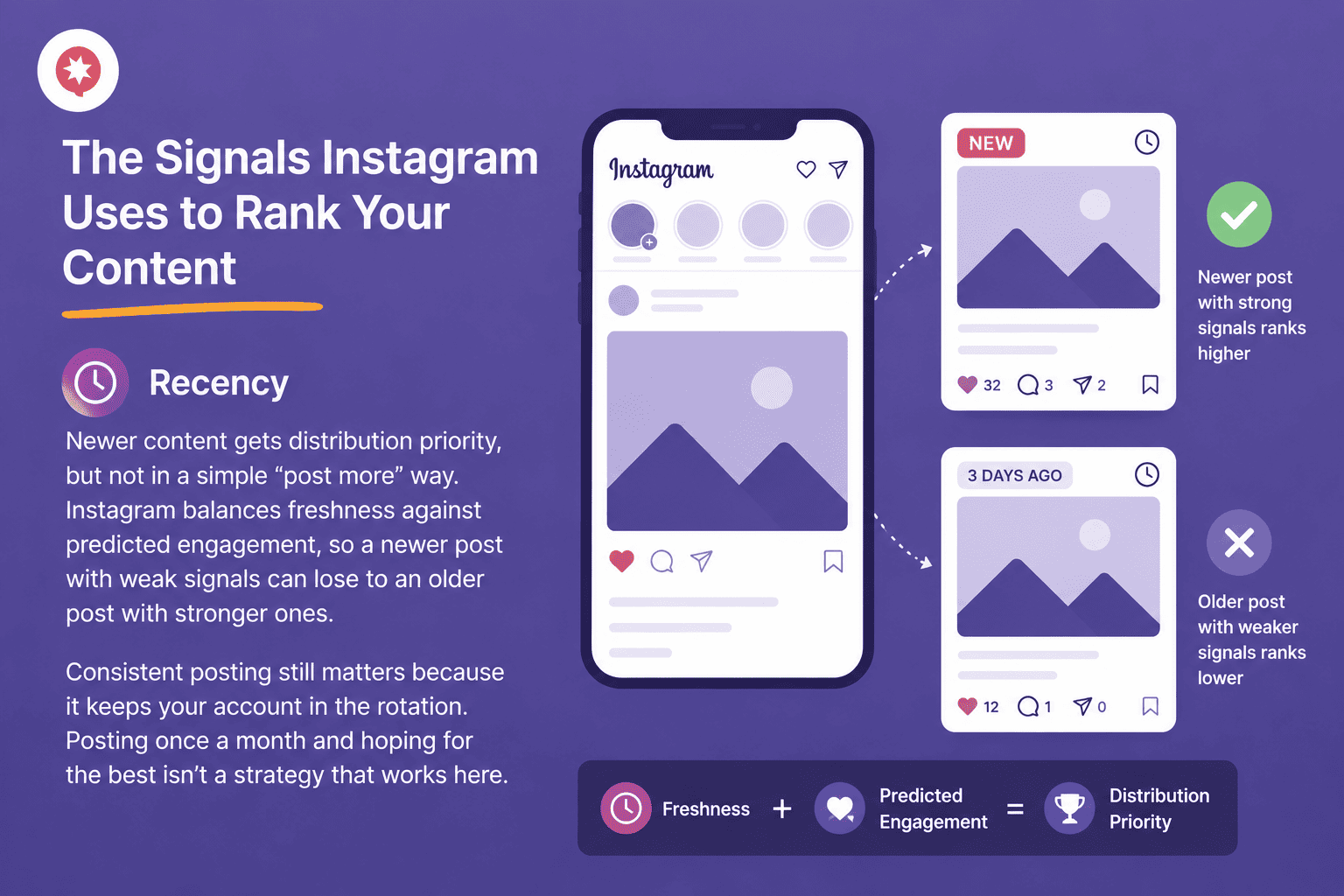
Instagram balances freshness against predicted engagement, so a newer post with weak signals can lose to an older post with stronger ones. Consistent posting still matters because it keeps your account in the rotation. Posting once a month and hoping for the best isn’t a strategy that works here.
Usage patterns
Instagram personalizes based on how someone is using the app in a given session. A person opening it for 30 minutes during lunch gets a different experience than someone scrolling for three minutes before a meeting. You can’t control this directly, but it’s a useful reminder that reach isn’t purely about your content quality. The audience’s context on the other side matters too.
What the algorithm rewards in 2026
DM shares and saves matter more than likes now
Instagram has confirmed that sends per reach (how often a post gets DM’d to someone else) is one of the most heavily weighted signals in the system. When someone saves a post or sends it to a friend, they’re signaling that the content was worth holding onto. Likes are passive. Shares and saves require a deliberate action. The algorithm treats them completely differently. Saves and shares over likes, full stop.
Reels completion rate and the 3-second threshold
For Reels, the first three seconds are the whole game. If viewers swipe away before that, Instagram reads it as low-quality and throttles distribution.
Watch through to the end: strong positive signal. Replay it: even stronger. Put your most interesting moment first, not buried at the 20-second mark after a slow intro. Nobody waits for the setup anymore.
Content that triggers replies
Comments are good. Replies to comments and replies to Stories carry more weight than a single comment that never gets a response. Instagram interprets back-and-forth conversation as a strong relationship signal.
Posts that ask genuine questions or give people a real reason to respond generate these naturally. The key word is genuine. “Drop a comment below!” on a post that doesn’t actually invite a response doesn’t do much.
Original content vs. reposts
Instagram has been explicit about this. Original content gets significantly more distribution than reposted content, and accounts that repost 10 or more times in 30 days can be excluded from recommendations entirely.
If reposts are filling your calendar, that habit is likely capping your reach. The distribution gap is real: original posts get 40 to 60 percent more reach on average, according to current platform guidance.
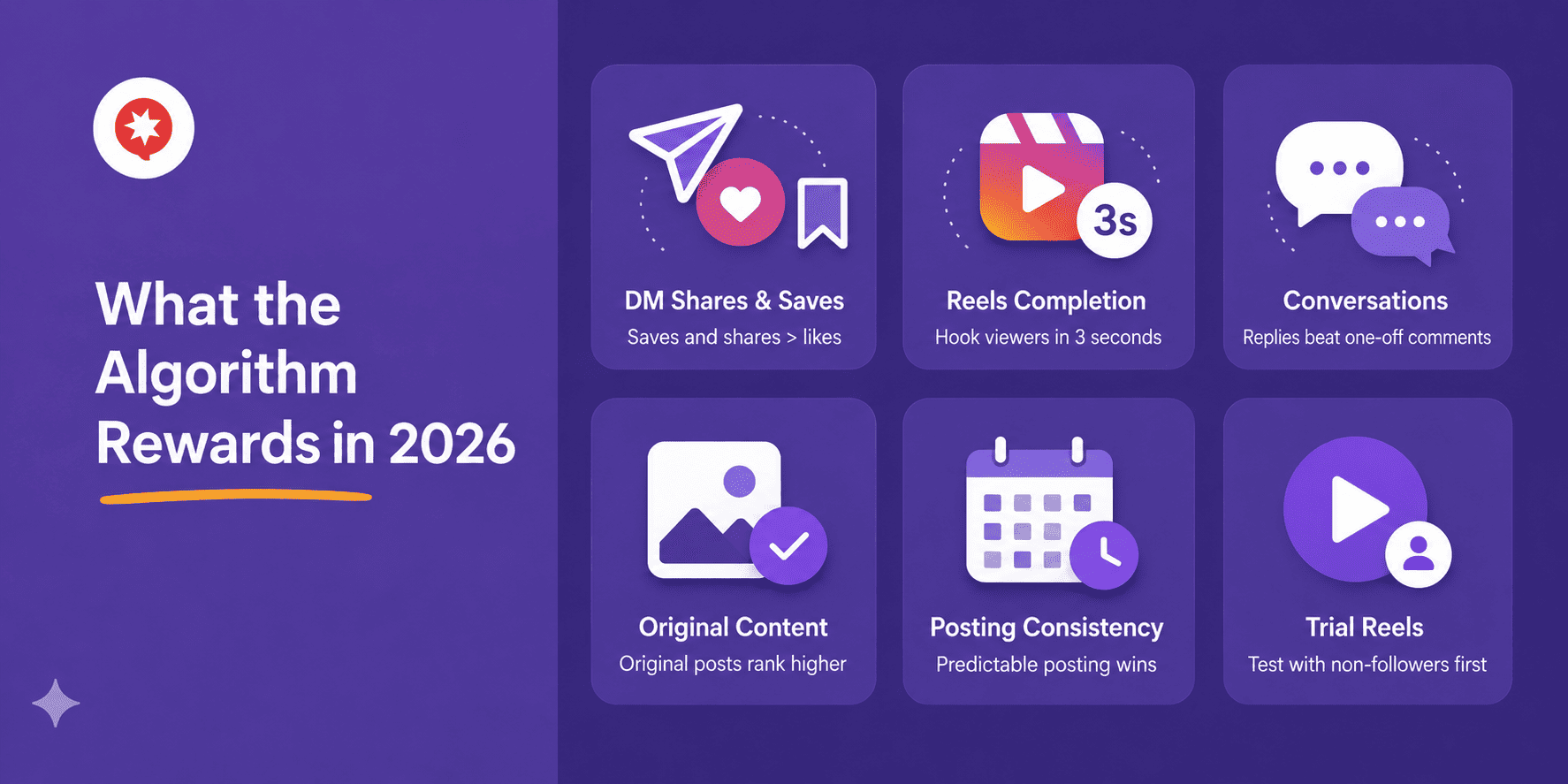
Consistent posting windows
Instagram looks for patterns. Accounts that post at consistent times build a rhythm the algorithm can predict and serve to audiences during their active hours.
The engagement gap is significant: consistent posters earn nearly five times more engagement per post compared to accounts that post sporadically, according to Buffer’s analysis of over four million Instagram posts. You don’t need to post every day. But erratic timing, posting three times on Monday and then going quiet until the following Thursday, makes it harder for the algorithm to know when to surface your content.
Trial Reels: test before you commit
The Trial Reels feature changes how you should think about experimental content. When you post a Trial Reel, Instagram shows it to non-followers first. If it earns strong watch time, shares, and replies from that audience, you can push it to your full following. If it underperforms, archive it before it creates a weak signal on your account.
This is worth using when you’re testing a new format, a different hook style, or a topic you’re unsure your existing audience will respond to. It removes the guesswork that used to come with trying anything new on Reels.
What kills your reach
Posting and ghosting
The first hour after posting is when Instagram actively tests your content with a small sample of your audience. If you post and immediately close the app, you’re not there to respond to early comments and replies, the conversation stalls, and the algorithm reads weak initial engagement and slows distribution. Treat that first hour as part of the publishing process, not the aftermath.
Ignoring Reels entirely
Instagram has been clear: Reels get more reach than any other format on the platform. If your entire strategy is static feed posts, you’re operating in a lower-reach tier by default. You don’t need to post Reels every day, but having nothing in the short-form video category in 2026 is a real disadvantage.
Inconsistent posting cadence
Going dark for two weeks and then posting five times in one day doesn’t work. A steady three to four posts per week outperforms a feast-and-famine pattern consistently. Streaks and crashes actually signal lower reliability to the algorithm than a slower, more predictable rhythm.
Link-in-bio posts
Instagram deprioritizes posts designed to send people off the platform. A caption that ends with “link in bio” signals that your content’s goal is to get someone to leave. Save that for Stories, where it performs better. Keep feed captions focused on engagement within the app.
Reposting other accounts’ content too often
Regularly sharing memes or other accounts’ posts trains the algorithm to see you as a reposter. That puts you in a lower-distribution category and limits how often Instagram recommends your account to new audiences. The occasional share is fine. A pattern of them is not.
Your Instagram content shouldn’t stop working when the algorithm does
Smash Balloon Instagram Feed Pro displays a live, auto-updating feed on your WordPress site. New posts appear automatically, no manual updates needed.
Get Instagram Feed ProHow to apply this to your business account
Seven adjustments worth making based on how the algorithm actually works right now. For a broader look at growing your presence on the platform, this Instagram marketing tips roundup covers the wider strategic picture.
- Before you post anything, ask: would someone DM this to a friend? Would they save it to come back to? Tips, useful facts, strong opinions, and tutorials tend to generate saves. Funny or surprising content tends to get sent. Design toward one of those two outcomes.
- Start Reels with the payoff. The interesting part goes first, not after a 15-second setup nobody sits through.
- Stay in the app for the first hour after posting. Reply to early comments. Every reply brings the commenter back and extends the engagement window the algorithm is watching.
- Keep reposts rare. Aim for at least 80 percent original content. The occasional reshare won’t hurt you. Making it a habit will.
- Pick two or three posting days and protect them. Not every day, just consistent days. Three reliable days per week beats ambitious daily posting that falls apart after week two.
- Write captions that actually invite a response. A genuine question or a clear take generates more meaningful engagement than a call to action. Save the hard sell for Stories and paid placements.
- Use keywords in your captions, not just hashtags. Instagram now uses natural language processing to understand what your post is about, and that information feeds into Explore and Reels distribution decisions. Keywords in your caption carry more discovery weight in 2026 than hashtags do. Write captions that clearly describe your topic and audience.
For the full strategy side of Instagram, how to use Instagram for business covers everything from setup to long-term growth.
Why your website is the one place the algorithm can’t touch
The algorithm will keep changing. What Instagram rewards in 2026 will be different in 2027.
The platform can deprioritize a format you’ve built your whole strategy around, and there’s nothing you can do about it. That’s the trade-off of building primarily on a channel someone else controls.
Your website doesn’t have that problem. No algorithm decides who sees it. No update changes what gets surfaced overnight.
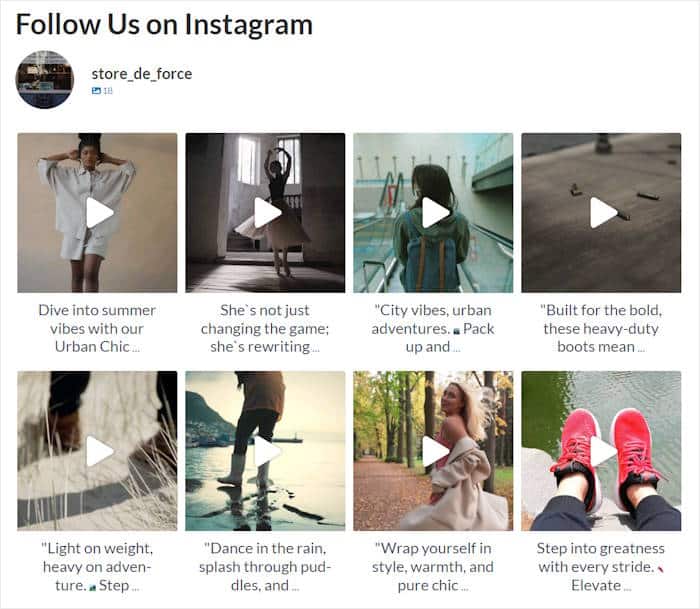
Bringing your Instagram content onto your website means the posts you’re working hard to create keep doing work even after Instagram stops distributing them.
If you’re focused on how to increase Instagram followers, your website is a natural part of that strategy: it reaches people who found you through Google, not just whoever the algorithm showed you to that day.
Smash Balloon Instagram Feed Pro displays a live, auto-updating Instagram feed on any WordPress site. New posts appear automatically, no manual updates, no coding, no maintenance. The feed inherits your theme’s styling so it looks like it belongs there.
How to know if the algorithm is actually working for you
Most people track the wrong numbers. Likes and follower counts feel like progress but don’t tell you whether the algorithm is actually distributing your content. Here’s what to watch instead.
Share rate. This is shares divided by reach. A rising share rate means your content is getting forwarded person to person, which is the signal that carries the most weight in 2026. If your share rate is low, content isn’t motivating people to send it. That’s the clearest sign your content strategy needs adjusting.
Saves. A high save rate means your content has reference value: people want to come back to it. Saves tend to come from informational posts, tutorials, checklists, and recommendations. If you’re consistently earning saves, you’re producing the kind of content the algorithm actively promotes.
Non-follower reach. Instagram Insights shows what percentage of your reach came from non-followers. A rising non-follower percentage means the algorithm is recommending you to new audiences. Flat or declining non-follower reach means you’re staying inside your existing bubble.
Profile visits from Explore and Reels. If the algorithm is working for you, you’ll see profile visits coming from those surfaces in your Insights. These are where new audiences find you. Profile visits from non-followers often convert to follows, which compounds over time.
Check these four numbers monthly, not weekly. Weekly data is too noisy to act on. A 30-day view gives you a clear picture of whether your content is earning distribution or sitting flat.
FAQs on the Instagram Algorithm in 2026
Does the Instagram algorithm punish you for posting too much?
Not directly. Posting 10 times a week with weak engagement is worse than posting 3 times with strong engagement. Instagram measures quality signals per post, not raw frequency, so the practical limit is whatever you can sustain at a quality level that actually generates reactions. Most business accounts perform best somewhere between 3 and 5 posts per week.
Do hashtags still matter in 2026?
Yes, but a lot less than they used to. Instagram has confirmed that interest and relationship signals now outweigh hashtag-based discovery for most accounts. Keywords in your captions now carry more discovery weight than hashtags for Explore and Reels distribution. Three to five targeted hashtags are still worth using for niche community reach, but they shouldn’t be the main event in your caption strategy.
Can you reset the Instagram algorithm?
Yes. Instagram added a “Reset Suggested Content” option in 2026 under Settings > Content Preferences. Tapping it clears your interest signals and gives you a fresh slate for what appears in your Explore feed and Reels recommendations. It does not affect your followers, your posting history, or how your content is distributed to others. It only resets what Instagram shows you, not what Instagram shows other people.
Does using third-party scheduling tools hurt your reach?
No. Instagram has confirmed that official API-connected scheduling tools don’t penalize reach. Tools that connect through Instagram’s official API are treated the same as native posting. What matters is content quality and engagement after publishing, not the tool you used to publish it.
What type of content gets the most reach on Instagram in 2026?
Reels with strong completion rates, by a clear margin. After that, original feed posts that generate DM shares and saves outperform posts that only collect likes. Carousel posts hold attention longer than single images because every swipe counts as active viewing, and they now support up to 20 slides. Stories are reliable for existing followers but don’t drive new audience growth the way Reels do.
What does Instagram prioritize above everything else?
Views and DM shares, together. Instagram named Views its unified primary metric for 2026, meaning it tracks how many people actually saw your content across every format. But among engagement signals, DM shares carry the most weight. When someone sends your content to another person, that’s the strongest signal that your content was worth someone else’s time. Design for both: content people watch all the way through, and content people send.
Start working with the algorithm now
We covered how Instagram’s algorithm actually works in 2026, what signals it weighs most heavily, and the specific things that limit your reach without you realizing it. I’ve seen how understanding these signals can really make a difference, especially for business accounts that were doing everything “right” and still seeing flat results.
The challenge is that Instagram’s algorithm keeps changing. What it rewards this year may look different in 12 months, and you can’t control what it surfaces or when. That’s precisely where Smash Balloon Instagram Feed Pro shines.
Smash Balloon Instagram Feed Pro brings your Instagram content onto your WordPress site automatically, so your posts keep working for you regardless of what the algorithm does next. Your site visitors see your latest content whether Instagram sent them there or not.
Here’s what I suggest:
- Audit your last 30 days of Instagram Insights and look at share rate, saves, and non-follower reach, not just likes
- Pick two or three consistent posting days and protect them going forward
- Test one Trial Reel this week with a format or topic you’d normally avoid
- Get Smash Balloon Instagram Feed Pro and bring your Instagram content onto your site so it keeps reaching people beyond the algorithm
Have any questions about how the Instagram algorithm works in 2026? Just let me know in the comments below!