Social Wall
 Feed Analytics


What affects how quickly a Facebook feed loads, and the performance options added in version 6.0 to speed it up.
Would you like to find out why the page with your Facebook feed loads slowly, and which settings can speed it up?
This guide covers the settings in Facebook Feed that change how much work the plugin does when your page loads. They range from the number of posts to how often the plugin checks Facebook for new ones. Other things on the page, such as your theme or your host, can slow it down too. These steps only cover the feed.
Before you get started, make sure Facebook Feed is installed and activated on your WordPress site. Some settings below are part of Facebook Feed Pro, and each section says which.
- Show Fewer Posts
- Check the API Post Limit
- Choose How Often the Plugin Checks for New Posts
- Keep Optimize Images Turned On
- Using the Multifeed Extension
- Frequently Asked Questions
Show Fewer Posts
To get started, we’ll lower the number of posts your feed shows at first.
The more posts a feed shows at first, the more the plugin has to get and display when the page loads. A Load More button lets visitors see the rest.
- In the WordPress dashboard, go to Facebook Feed » All Feeds. Then, click the edit icon on the feed you want to change.
- In the feed builder, click the Customize tab. Then, click Feed Layout.
- Under Number of Posts, enter a lower number in the Desktop field and in the Mobile field.
- Click Save.
With the default API Post Limit, Facebook Feed asks Facebook for a few more posts than the number you set here. A lower Number of Posts therefore also means a smaller request to Facebook.
Next, add a Load More button. The posts you leave out of the first load are then still one click away. The Load More Button section is part of Facebook Feed Pro.
- In the feed builder, click the Customize tab. Then, click Load More Button.
- Turn on Enable.
- Click Save.
Next, look at how many posts the plugin asks Facebook for.
Check the API Post Limit
API Post Limit sets how many posts the plugin asks Facebook for. It has two choices, Automatic and Manual.
Automatic is the default. The plugin works out the number for you. It asks for your Number of Posts plus a few extra.
If you changed it to Manual and entered a high number, the plugin asks Facebook for more posts than your feed needs. To go back to the default, follow the steps below.
- In the feed builder, click the Settings tab. Then, click Advanced.
- Next, find API Post Limit. Then, select Automatic.
- Click Save.
If you want to set the number yourself, select Manual instead. Then, enter a number from one to 100 in the field that appears. For most feeds, enter the same number as your Number of Posts, or slightly more.
If you use filters, keep the number a little higher. Filters work on the posts the plugin gets from Facebook. A very low number can therefore leave your feed with only a few posts.
Next, look at how often the plugin checks Facebook for new posts.
Choose How Often the Plugin Checks for New Posts
Facebook Feed saves your posts in your WordPress database and shows that saved copy when your page loads. The plugin only asks Facebook for new posts when it updates the saved copy.
The longer you wait between checks, the less often your site makes that request. A longer wait also means new posts take longer to show up in your feed.
You set this in the Caching box on the Feeds tab of the Settings page. It looks different in Facebook Feed Pro and in the free version.
In Facebook Feed Pro, the plugin updates the saved copy in the background on a schedule. The check does not wait for a visitor. There is no separate setting to turn on. To choose the schedule, follow the steps below.
- In the WordPress dashboard, go to Facebook Feed » Settings.
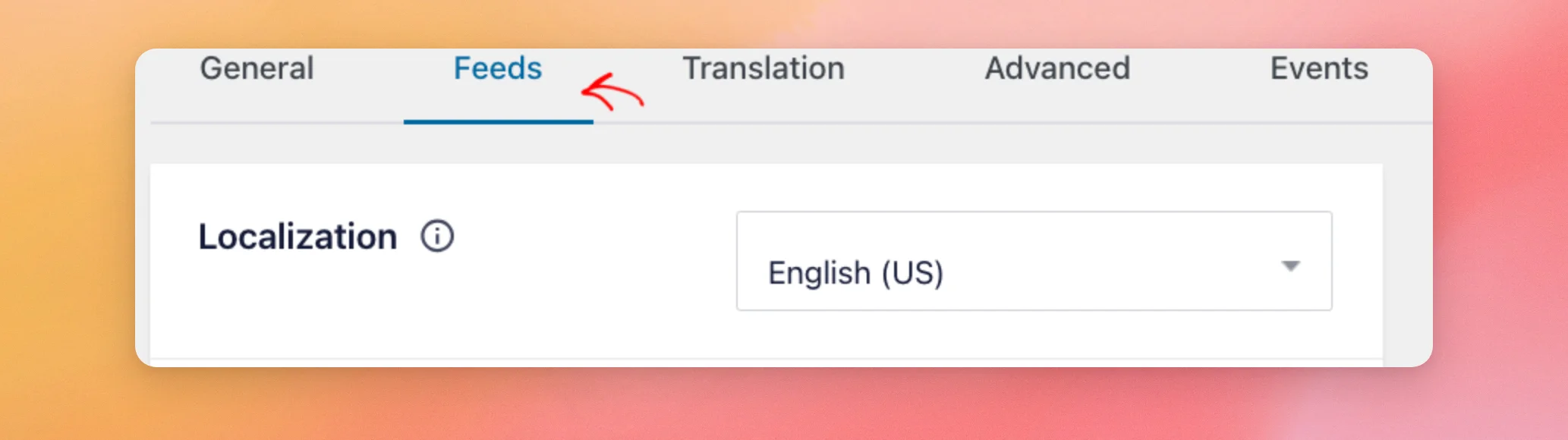
- Click the Feeds tab.
- In the Caching box, open the interval dropdown and choose how often the plugin checks for new posts. The options are Every 30 minutes, Every hour, Every 12 hours and Every 24 hours. The default is Every 12 hours.
- When you choose Every 12 hours or Every 24 hours, you can also pick the hour and AM or PM for the check.
- Click Save Changes.
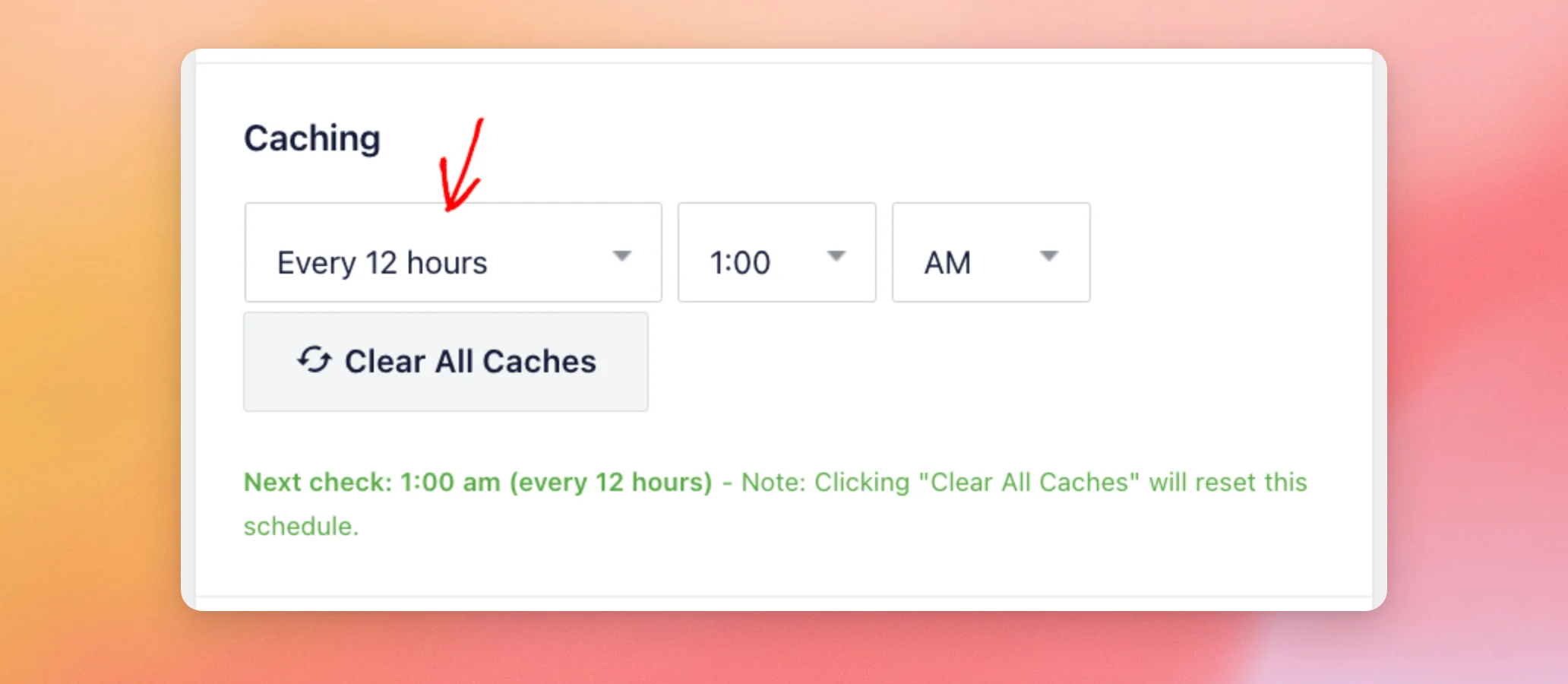

Under the box, the plugin shows when the next check happens.
In the free version, the Caching box shows a number and a unit instead. The plugin checks for new posts when someone visits a page with your feed after that time has passed. Updating in the background is part of Facebook Feed Pro.
To change the time in the free version, follow the steps below.
- In the WordPress dashboard, go to Facebook Feed » Settings.
- Click the Feeds tab.
- In the Caching box, enter a higher number and choose Minutes, Hours or Days from the unit dropdown. The default is one hour.
- Click Save Changes.
Clear All Caches does not speed up your page. It empties the saved copy of your posts. On the next page load, the plugin has to get the posts from Facebook again. Clear All Caches is useful when you want fresh posts right away.
Save Changes does the same. It also clears the saved copy. The first visit after you save can therefore load more slowly.
For help with a feed that shows old posts, see our guide on why a feed stopped updating or is missing posts. If your host does not run WordPress scheduled tasks reliably, see our guide on forcing CRON jobs to run.
Next, look at how the plugin stores the images in your feed.
Keep Optimize Images Turned On
The Optimize Images setting creates several local copies of each image in different sizes. The plugin then shows the smallest copy that fits the size of your feed. This way, visitors do not download larger files than they need. The copies use your WordPress storage.
Optimize Images is part of Facebook Feed Pro. It is turned on by default. Visitors get the smaller copies without any setup.
Next, go to Facebook Feed » Settings. Then, click the Advanced tab and find the Optimize Images toggle.
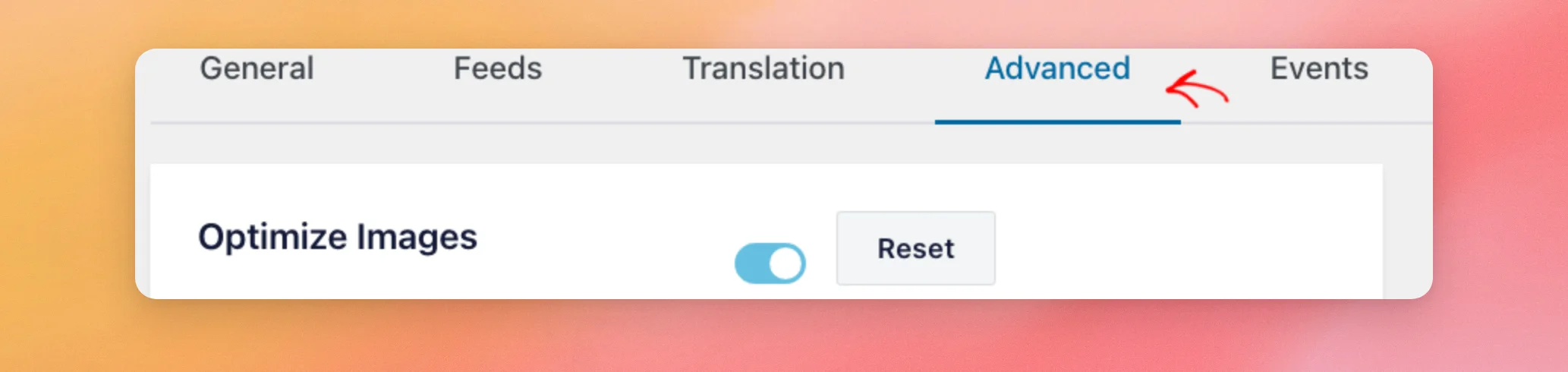
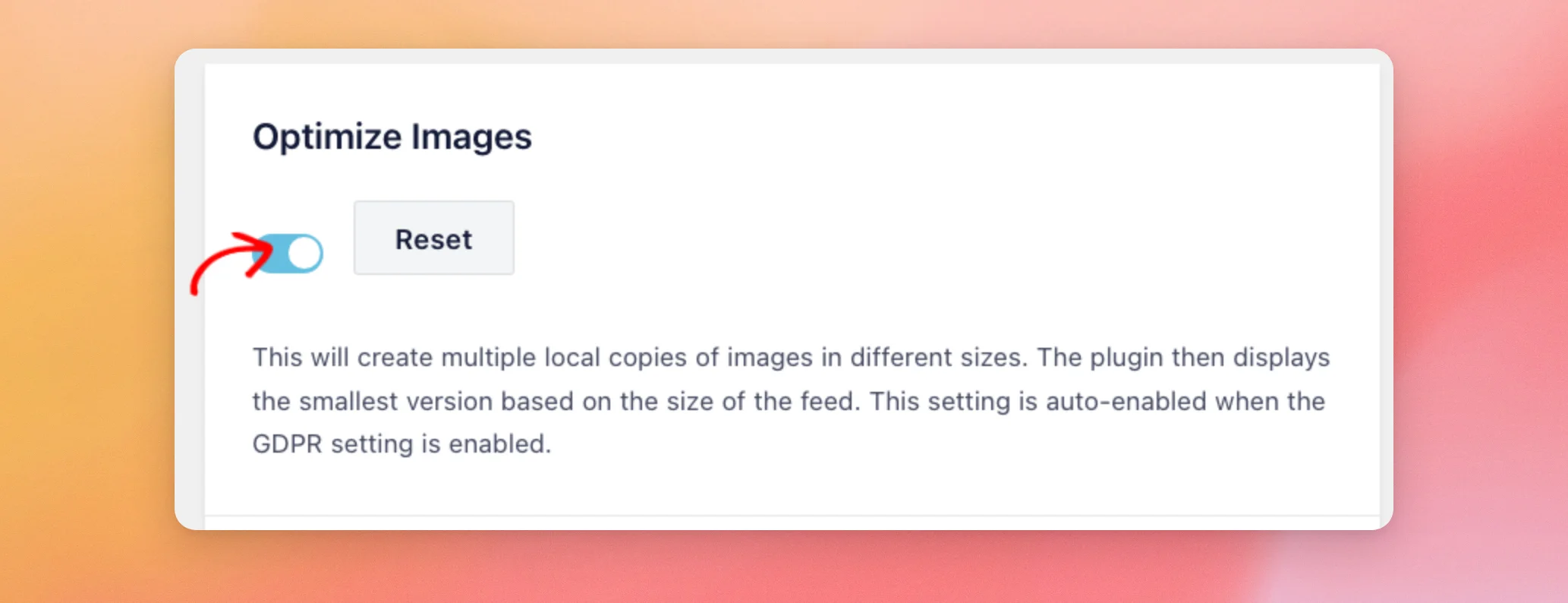
The toggle can only be changed when the GDPR image and video loading option on the Feeds tab is set to No. With Automatic or Yes, Optimize Images stays on. If you turned it off, turn the toggle back on and click Save Changes.
Next, if you show posts from more than one Facebook Page, there is one more setting to know about.
Using the Multifeed Extension
The Multifeed extension is a separate plugin for Facebook Feed Pro. It lets one feed show posts from several sources, such as more than one Facebook Page.
For the steps, see our guide on using the Multifeed extension.
With the extension, two of the settings in this guide count differently.
- Number of Posts is the total number of posts the feed shows.
- API Post Limit is the number of posts the plugin gets from each source.
For example, say your feed has five sources and the API Post Limit is Manual with a limit of three. The plugin then gets three posts from each source, 15 in total. With Automatic, the plugin works out the number for you.
That’s it! You now know which Facebook Feed settings change how fast your page loads. Start with the number of posts. Then check your caching and image settings. To fix a feed that shows old posts, see why a feed stopped updating or is missing posts.
Frequently Asked Questions
Below, we’ve answered some of the most common questions about slow feed pages.
Why is the first load of my feed slower than the next ones?
The first time a feed is viewed, there is no saved copy of its posts yet. The plugin therefore gets them from Facebook while the page loads. After that, the page shows the saved copy. See Choose How Often the Plugin Checks for New Posts.
Does Clear All Caches speed up my page?
No. It can make the next page load slower. To find out why, and when it is useful, see Choose How Often the Plugin Checks for New Posts.
Which of these settings are in the free version?
Number of Posts, API Post Limit and the Caching box, with its number and unit, are in the free version. The Load More Button section, Optimize Images and updating the saved copy in the background are part of Facebook Feed Pro.