Social Wall
 Feed Analytics


A reference table of YouTube Feed error messages, what each one means and how to fix it, including invalid API key errors.
Would you like to find out what a YouTube Feed error message means and how to fix it?
In this guide, we’ll walk you through the most common messages, what causes each one, and the steps that clear it.
Before you get started, make sure YouTube Feed is installed and activated on your site, and that a feed is showing a message instead of your videos.
Note: Most error messages are shown only to site admins. Log in to WordPress before you check your page.
Here is what we will cover:
- Where Error Messages Appear
- Error: No connected account
- Error 400: API key not valid
- Error 403: Daily Limit for Unauthenticated Use Exceeded
- Error 403: YouTube Data API v3 has not been used in project
- Error 403: Requests from referer are blocked
- Error: No videos found
- Unlisted or Private Videos Show in My Feed
- My Feed Stops Updating
- Frequently Asked Questions
Where Error Messages Appear
When YouTube Feed can’t load your videos, it shows a message in place of the feed. Only site admins see these messages, so you won’t see them while logged out.
For errors that come back from YouTube, the message also shows the error code, a domain code, and a reason code. Admins also get a “Directions on how to resolve this issue” link below it.
If you see an error that isn’t listed here, copy the full message, including the codes, and contact our support team.
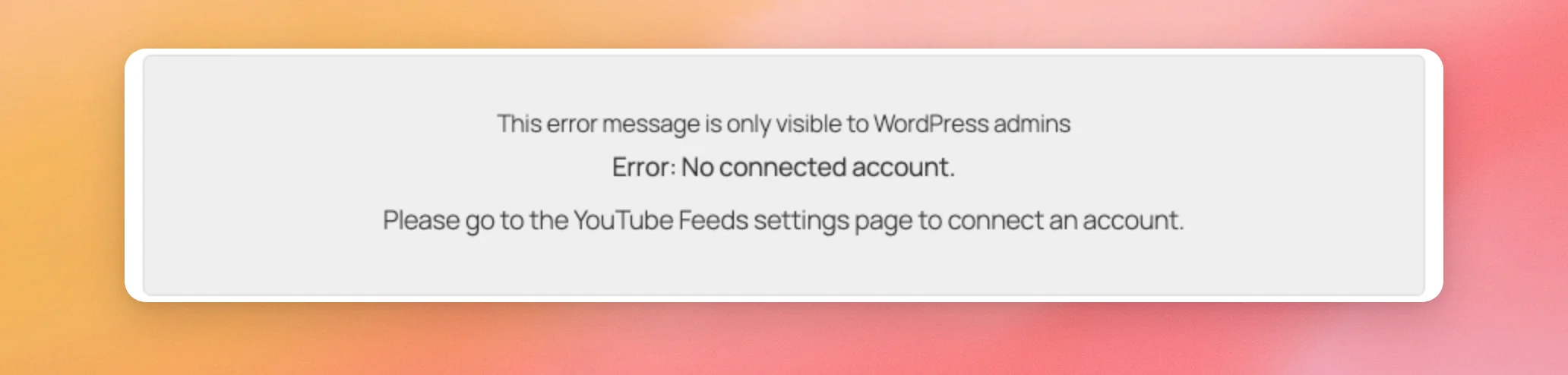
Error: No connected account
This message means the plugin has no API key and no connected YouTube account to load videos with. Only users who can manage YouTube Feed settings see it. As of version 2.11.0, visitors no longer see it.
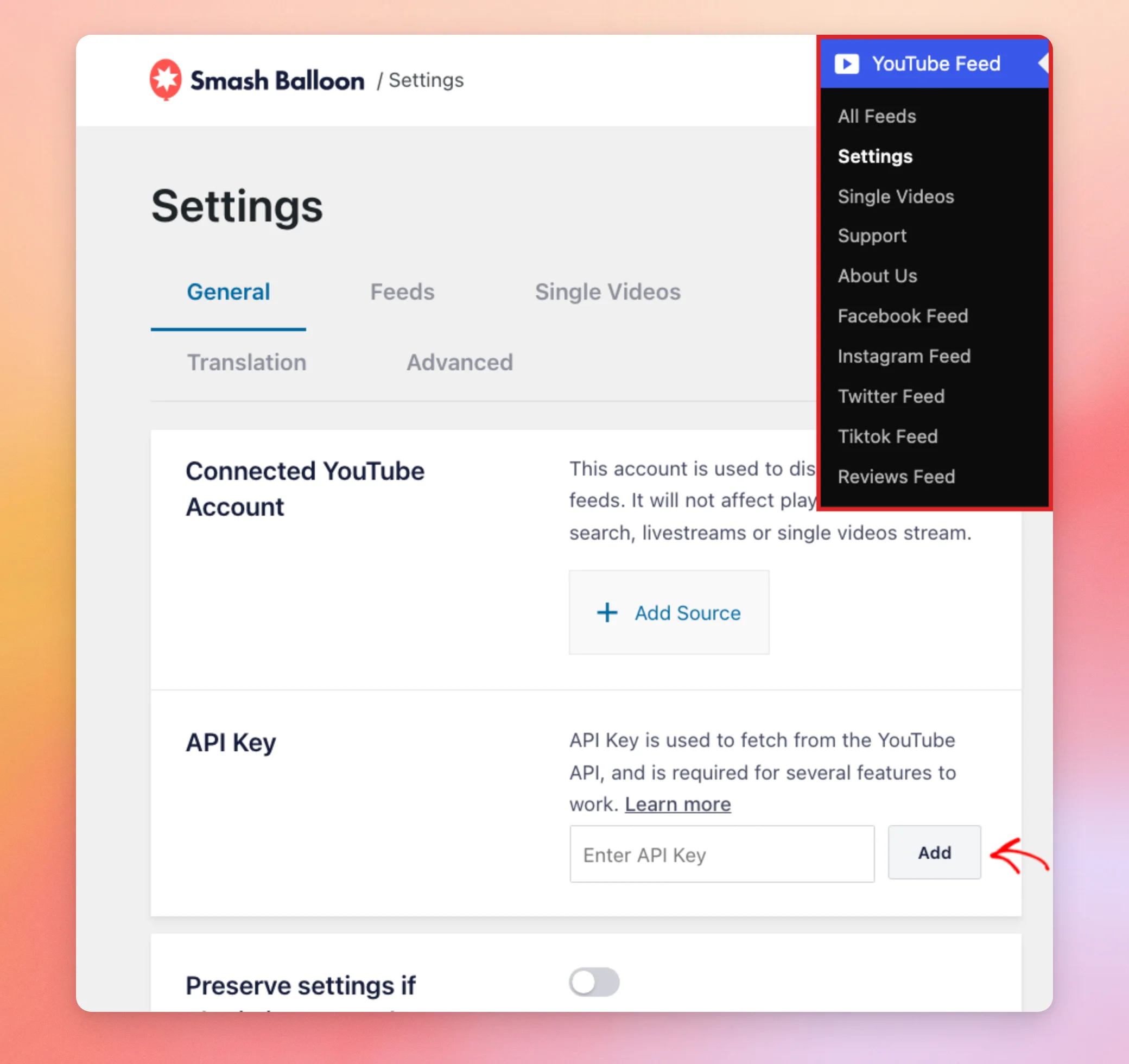
Solution: From your WordPress admin sidebar, go to YouTube Feed » Settings » General. In the API Key field, paste a YouTube API key. Then click Add. Our guide to creating and using a YouTube API key shows how to create one.
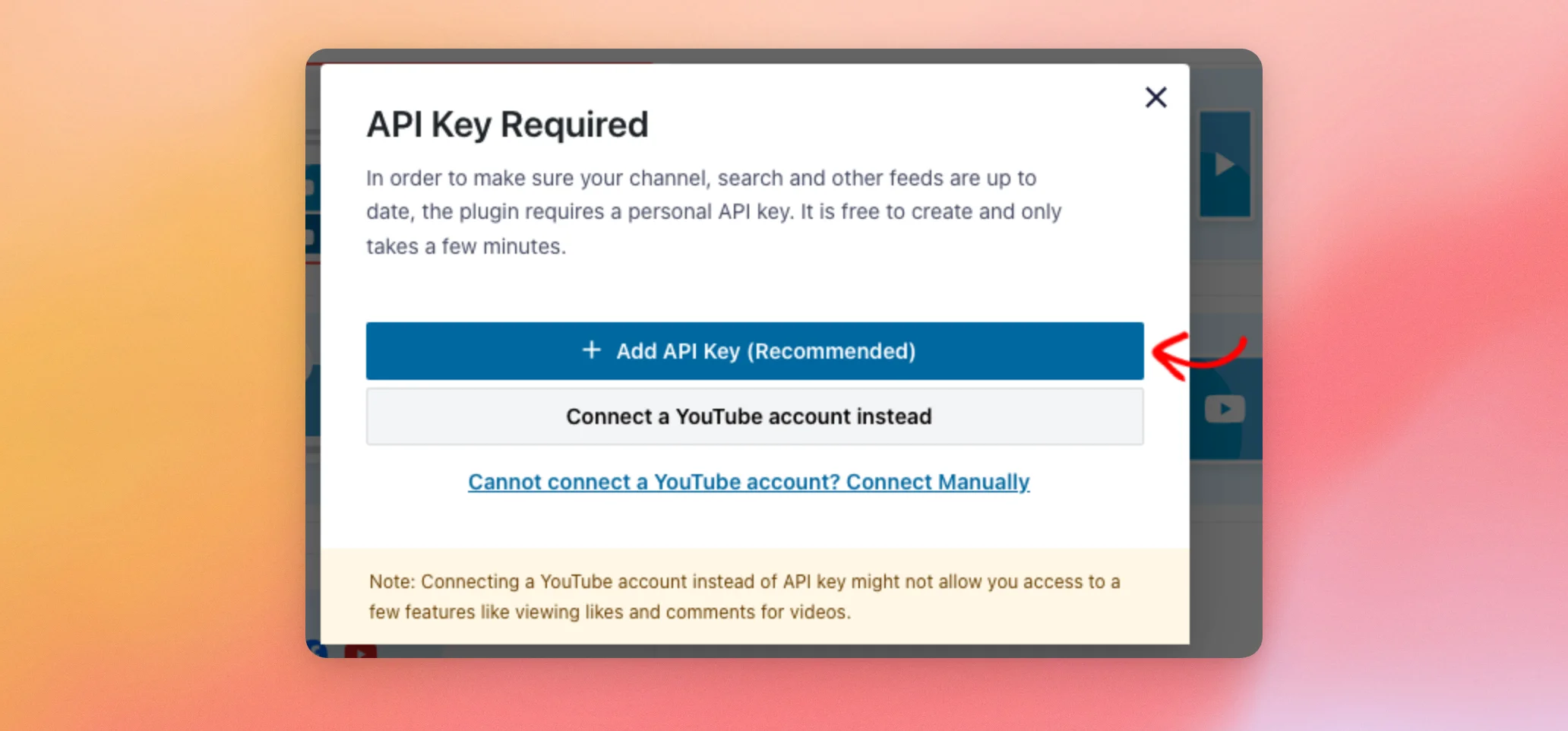
If you try to create a new feed before adding a key, the feed builder opens an API Key Required window instead. Once a key is saved, create the feed again.
Error 400: API key not valid
The full message reads “Error 400: API key not valid. Please pass a valid API key.” It means an API key is saved in the plugin, but YouTube doesn’t accept it.
Solution: Start by creating the key again using the steps in our API key guide. Next, copy the full key and paste it in the API Key field at YouTube Feed » Settings » General. Then click Update to save it.
Error 403: Daily Limit for Unauthenticated Use Exceeded
This message means your API key is over YouTube’s rate limit. The plugin caches your feed to avoid this, but the limit is shared with any other app or service that uses the same key.
Solution: A longer cache time means fewer requests to YouTube. From your WordPress admin sidebar, go to YouTube Feed » Settings » Feeds. Under Caching, choose a longer interval in the dropdown.
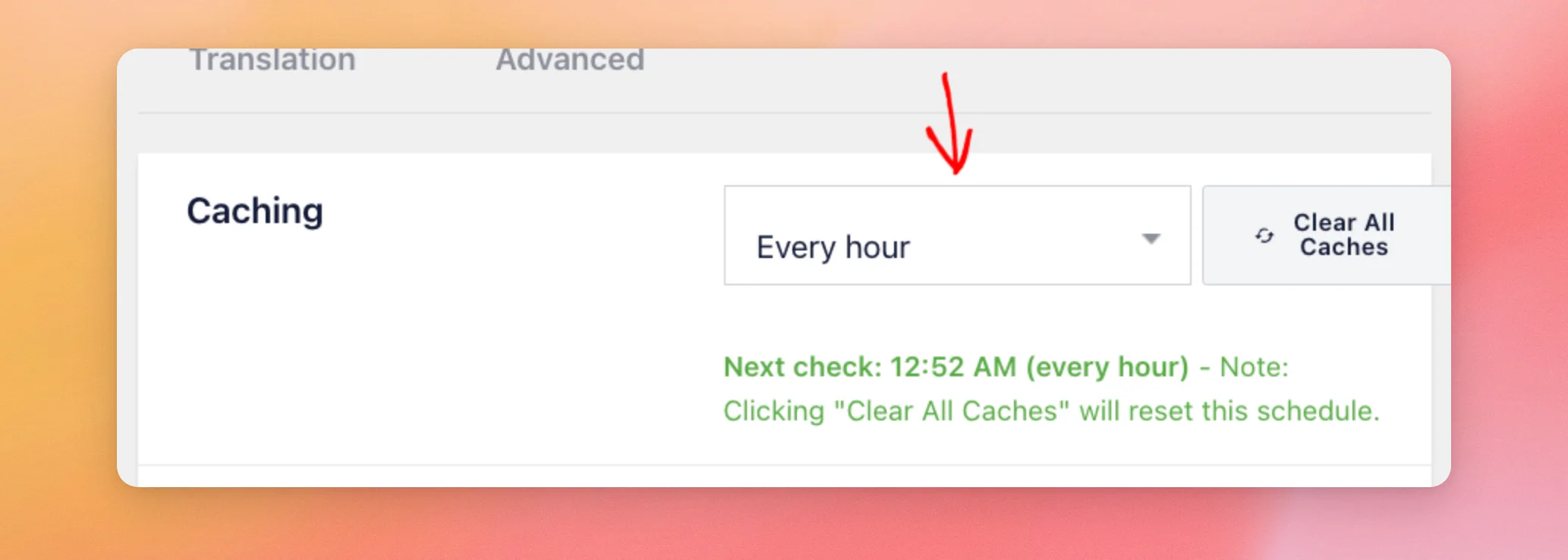
Then click Save Changes at the top right of the page.
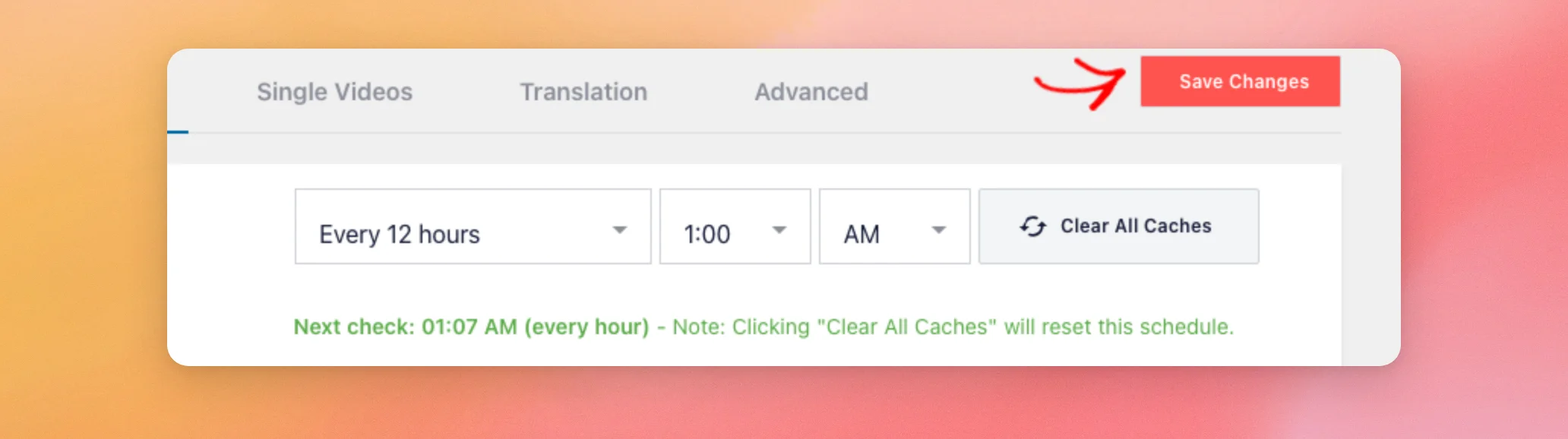
If you use the key in other apps, you can also create a second Google account and a new key by following the API key guide. The plugin accepts the key from any account.
If you only just set up the Google project and key, the error may be on YouTube’s side. In that case, delete the project and create a new one with the same guide.
Error 403: YouTube Data API v3 has not been used in project before or it is disabled
This error means the YouTube Data API v3 isn’t enabled on the Google project your key belongs to. The message includes a project number and a link to Google’s API page.
Solution: Either of these fixes works.
- While logged in to the same Google account you used to create the key, open the link from the error message. Then click the Enable button to turn on the YouTube Data API v3.
- If that doesn’t work, or you don’t have access to the account, create a fresh project and a new key. To make sure the new key belongs to the new project, follow every step in the API key guide. Then paste the new key in the API Key field at YouTube Feed » Settings » General and click Update.
Error 403: Requests from referer are blocked
This error appears when your API key is restricted to certain websites, but the restriction is missing a required address.
Solution: In the key’s restrictions in Google Cloud, add both of these as separate entries:
- Your website address, including the prefix, for example
https://yoursite.com/ www.googleapis.com
If you also set an API restriction, choose YouTube Data API v3.
See the API key guide for where these settings are.
Error: No videos found
This message means the plugin reached YouTube but got no videos back for the feed. It reads “Make sure this is a valid channel ID and that the channel has videos available on youtube.com.”
Solutions:
- For a Channel feed, enter only the channel ID. It starts with
UC. Our channel ID guide shows where to find it. - For a Playlist feed, enter only the playlist ID, the part of the playlist address after
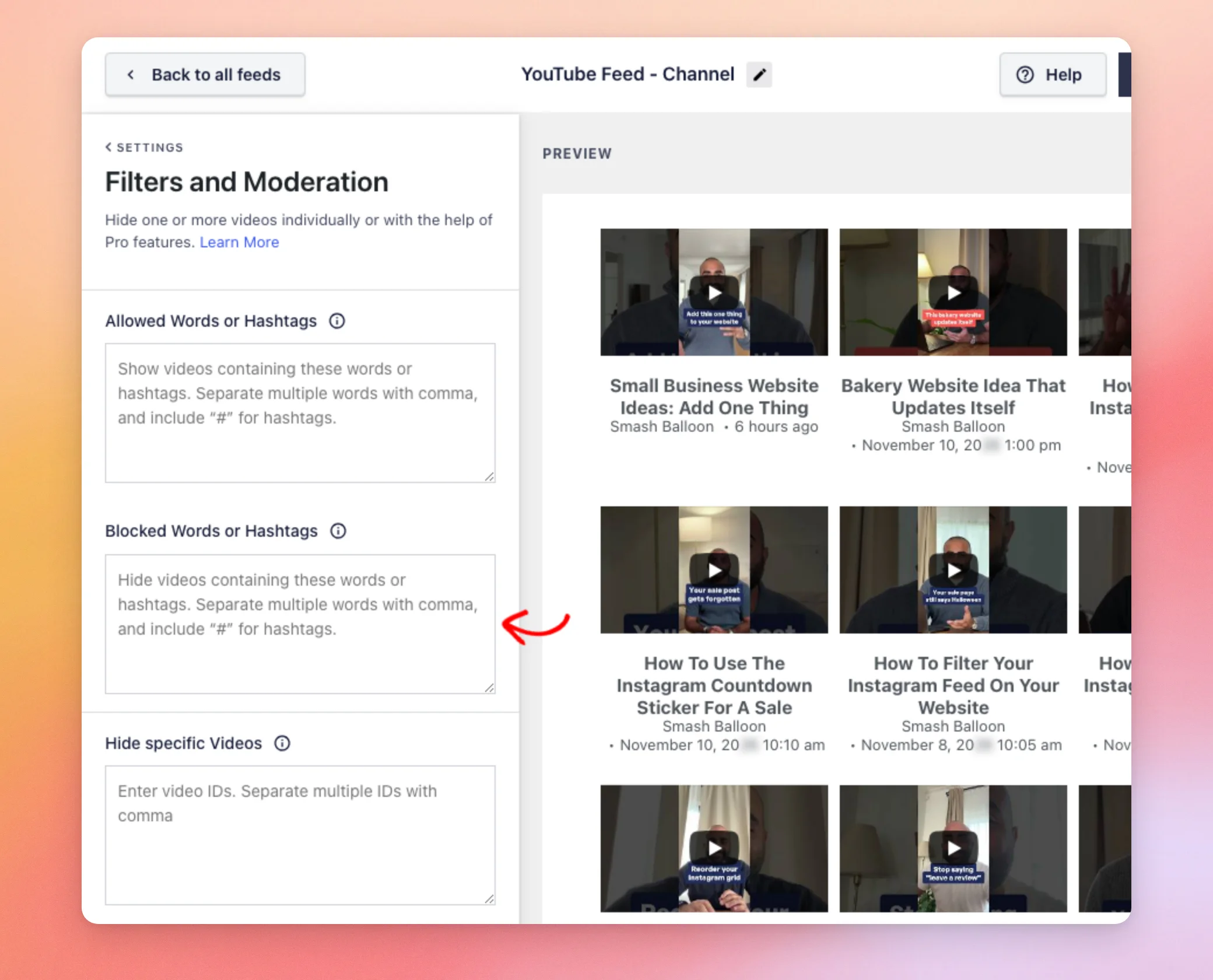
list=. - Check that your filters aren’t hiding every video. With the elite license level, Filters and Moderation has Allowed Words or Hashtags, Blocked Words or Hashtags, and Hide specific Videos. Clear any word or video ID that doesn’t belong.
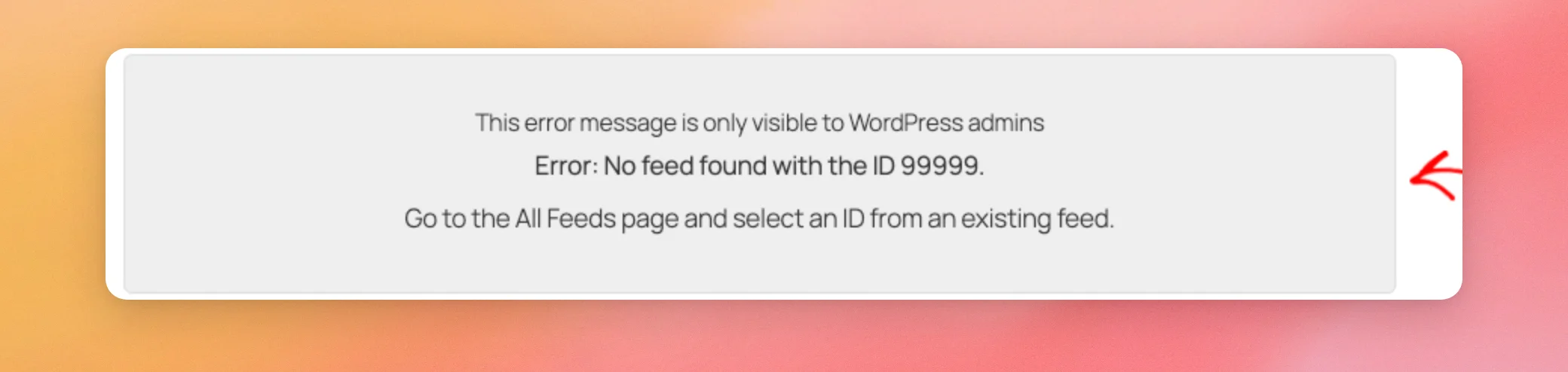
A different message, “Error: No feed found with the ID”, means the shortcode points to a feed that doesn’t exist. From your WordPress admin sidebar, go to YouTube Feed » All Feeds. Then copy the shortcode of an existing feed and use it instead.
Unlisted or Private Videos Show in My Feed
If your feed shows unlisted or private videos, you are most likely using the plugin without an API key. Without a key, the plugin can’t check the status of each video, so it shows every video it finds.
Solution: Add an API key, so the plugin can check each video’s status and show only published ones. Follow our API key guide.
If you have the elite license level, you can also hide private videos with a blocked word. To do this, open your feed in the editor. Next, go to Settings » Filters and Moderation. Then type PRIVATE in Blocked Words or Hashtags and save.
My Feed Stops Updating
The plugin refreshes each feed in the background. If a refresh gets nothing back from YouTube, it saves nothing, but still reports that it updated. The feed then keeps showing old videos until you clear the caches.
After a failed request, the plugin waits 5 minutes before it asks YouTube again.
In version 2.11.0 and later, this also covers a consent or CAPTCHA page. When YouTube sends one instead of feed data, the plugin records a connection error and tries again later. Site admins see “Unable to retrieve new videos from YouTube. Please try again later.”
To check the background refresh: From your WordPress admin sidebar, go to YouTube Feed » Support. Next, find the System Info section and click Expand. The report stays hidden until you do.
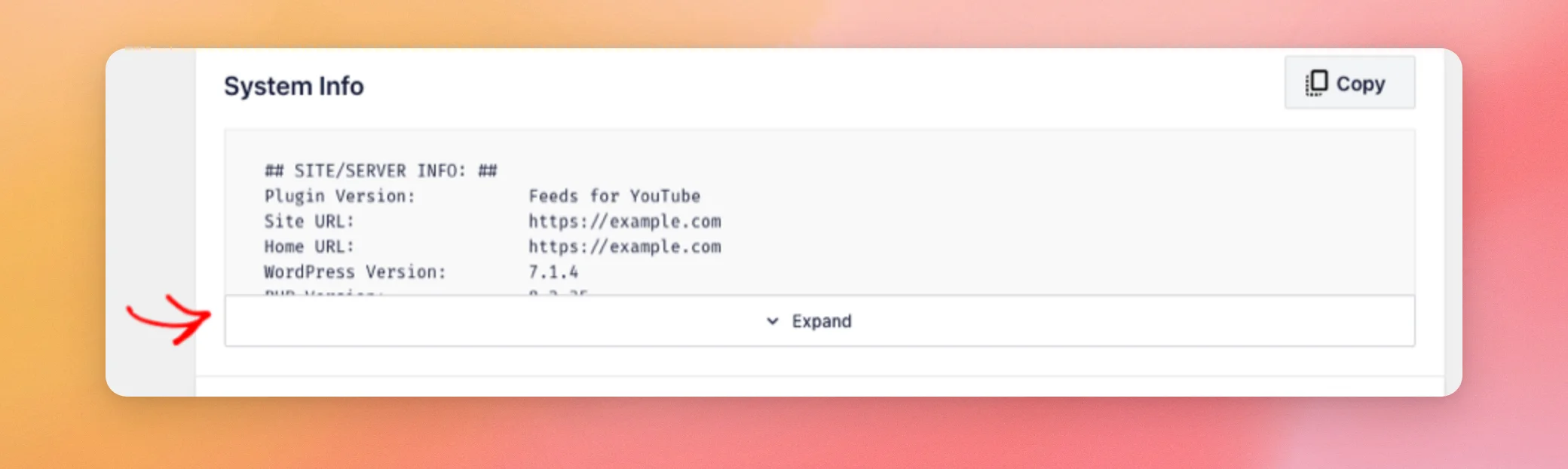
Then, scroll down to the Cron Cache Report heading.
The report shows when the background refresh last ran. Once a feed has been cached, it also lists a Last Retrieve time for each feed. A recent time means the refresh works. A date in 1970 means the background refresh has never saved that feed.
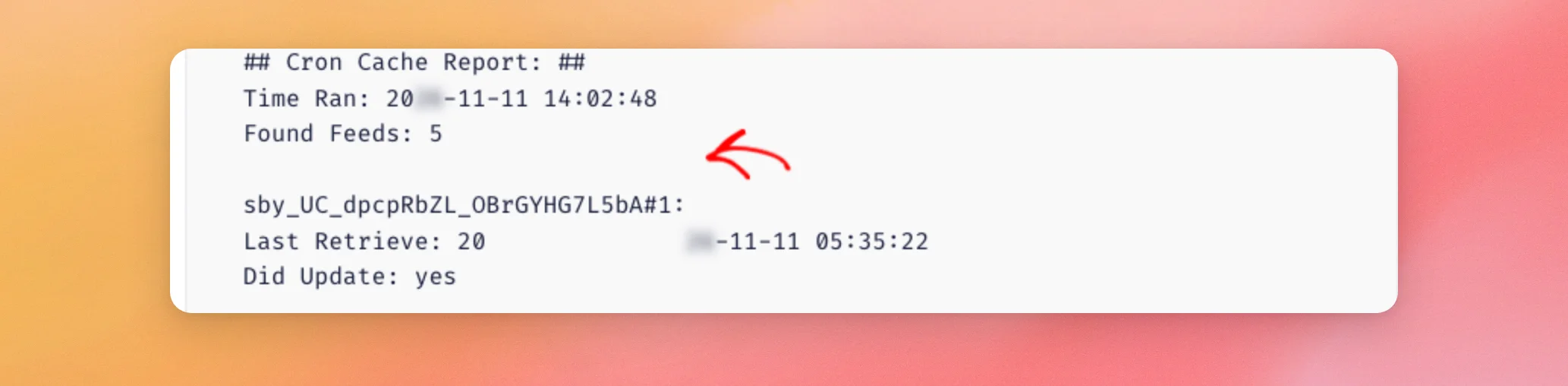
Note: Staging sites often pause scheduled tasks, so feeds don’t refresh there. Test the background refresh on your live site.
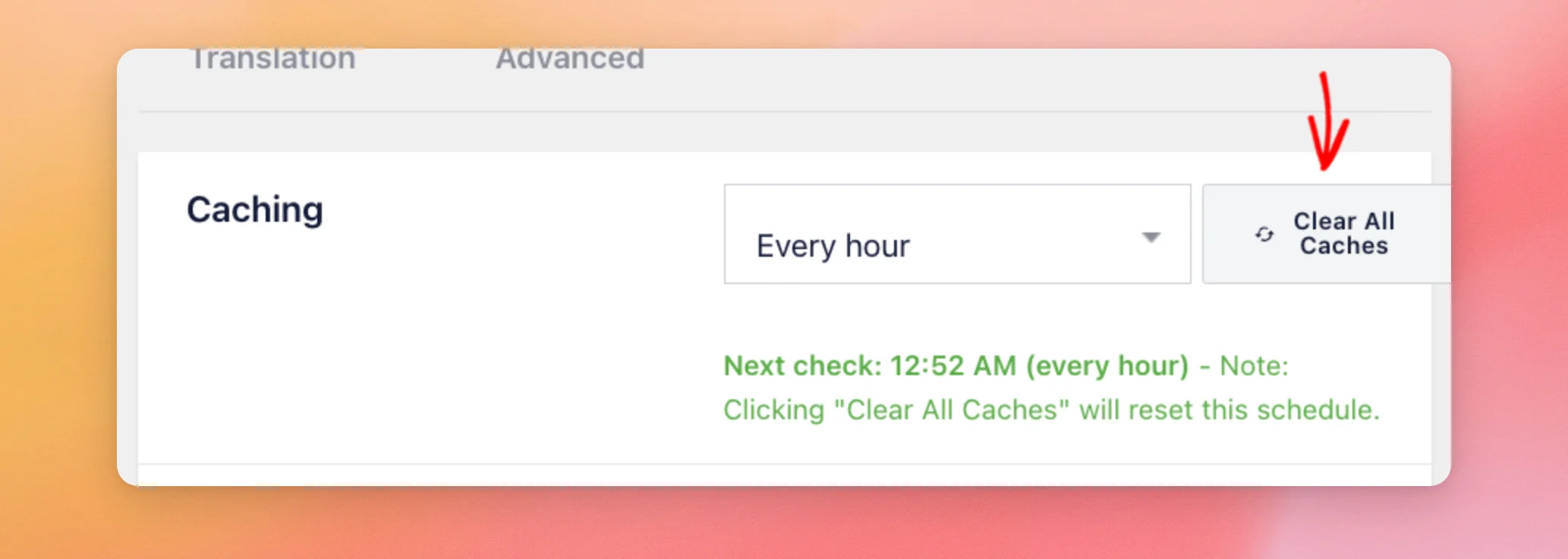
Solution: When the feed is stuck on old videos, clear its caches, or click Clear All Caches at YouTube Feed » Settings » Feeds. This rebuilds the feed from its current settings. The next background run then saves normally.
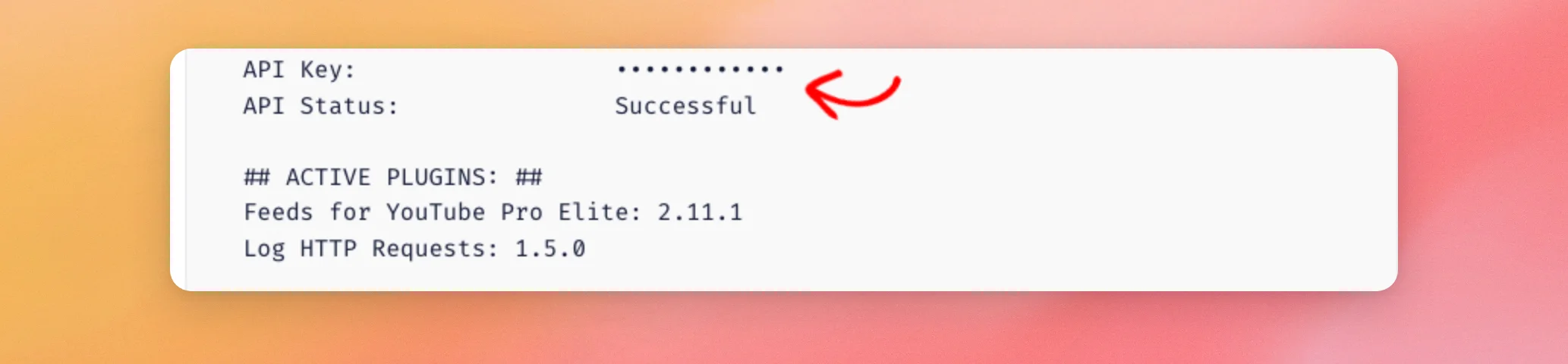
The same System Info section also shows whether the plugin sees an API key and its status.
That’s it! You now know what each YouTube Feed error message means and how to clear it.
Next, see our guide to creating and using a YouTube API key if you need a fresh key.
Frequently Asked Questions
Below, we’ve answered some of the most common questions about YouTube Feed errors.
Why can’t I see the error message when I’m logged out?
Error messages are shown only to site admins. Log in to WordPress and reload the page with your feed to see the message.
Why did “No connected account” stop showing to my visitors?
The message is meant for site admins only. Version 2.11.0 fixed a bug that could show it to visitors.
Where do I add or replace my API key?
Go to YouTube Feed » Settings » General and paste the key in the API Key field. Then click Add, or Update if a key is already saved. Our API key guide shows how to create one.