Social Wall
  Feed Analytics

How to create a Facebook Events Access Token in three steps: register as a Facebook developer, create an app, and connect it.
Would you like to display your Facebook events on your WordPress site?
In this guide, we’ll walk you through it in 3 steps. You’ll register as a Facebook developer, create your own Facebook app, and get the access token that connects your events to the plugin. All you need is admin access to the Facebook Page whose events you want to display.
Requirements: Events feeds require the Elite license level of Custom Facebook Feed Pro and plugin version 4.9.0 or higher.
Before you get started, make sure Custom Facebook Feed Pro is installed and activated on your WordPress site.
Facebook restricts access to events data. Because of this, events feeds work a little differently from other feed types. They connect through a Facebook app that you create in your own Facebook account.
It only takes a few minutes. You’ll only need to do it once.
Get the Page Access Token
In this step, you’ll generate a temporary User Access Token and hand it to the plugin. During the connection, Custom Facebook Feed Pro exchanges it for a Page access token that doesn’t expire.
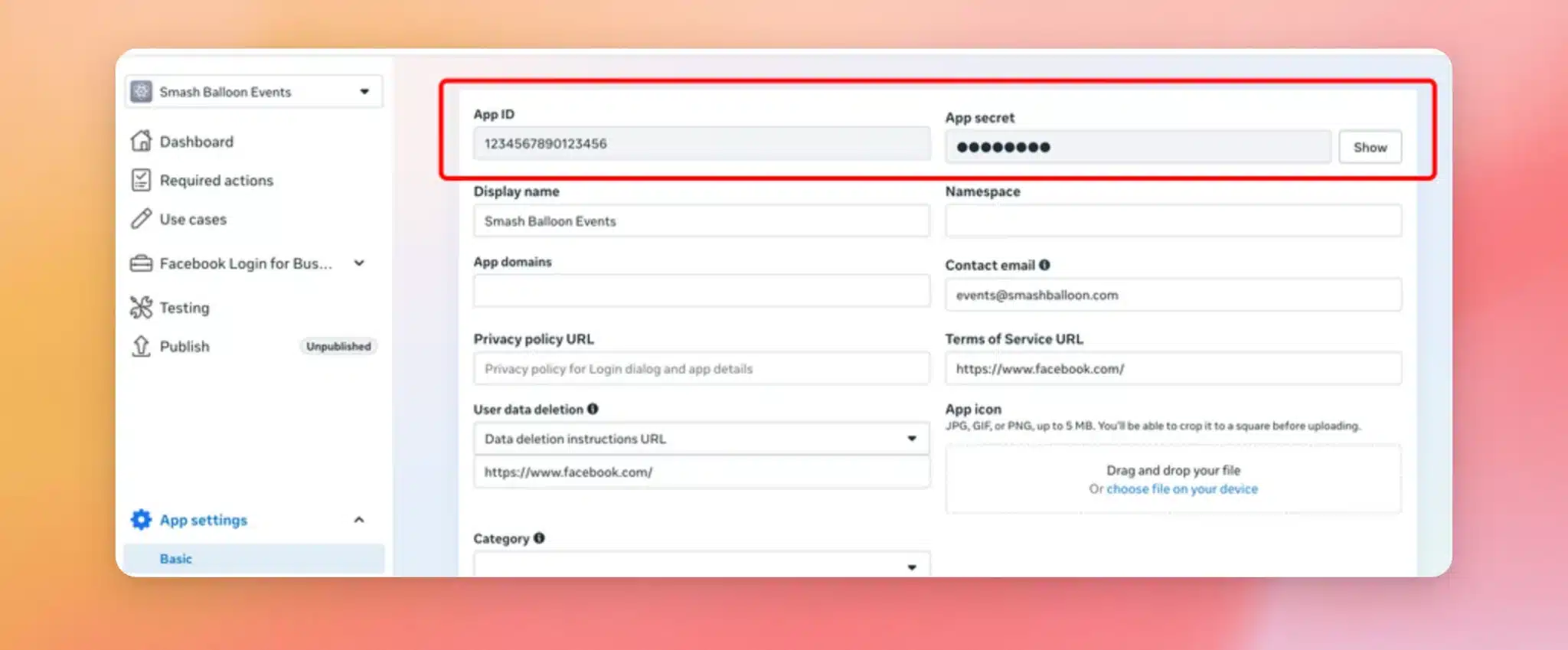
The plugin will ask for your app’s ID and secret. Let’s copy them now.
In the left sidebar, go to App settings » Basic.
At the top of the page you’ll find the App ID and App secret fields. To reveal the secret, click Show. Keep this page open, or copy both values somewhere safe for the connection step later.
Note: Treat your App secret and access token like passwords. Never share them publicly or with anyone outside your team, including our support team. If you need help with your events source, generate a 1-click login link at the bottom of the plugin’s Help page and send it to us along with the System Info from that same page.
With both values in hand, you’re ready to generate your access token.
Now we’ll generate the User Access Token that links your app to your Facebook account.
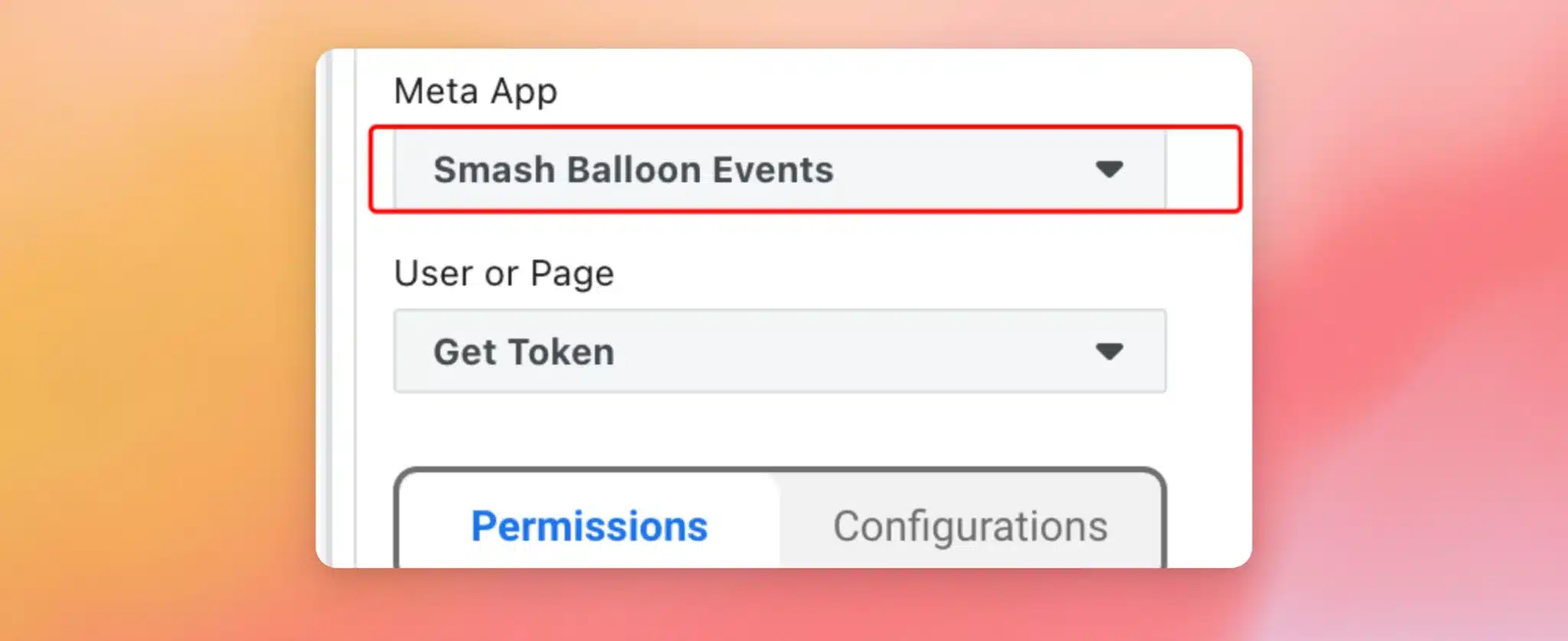
In the top menu of Facebook for Developers, go to Tools » Graph API Explorer, or open the Graph API Explorer directly. In the right-hand panel, your new app must be selected under Meta App.
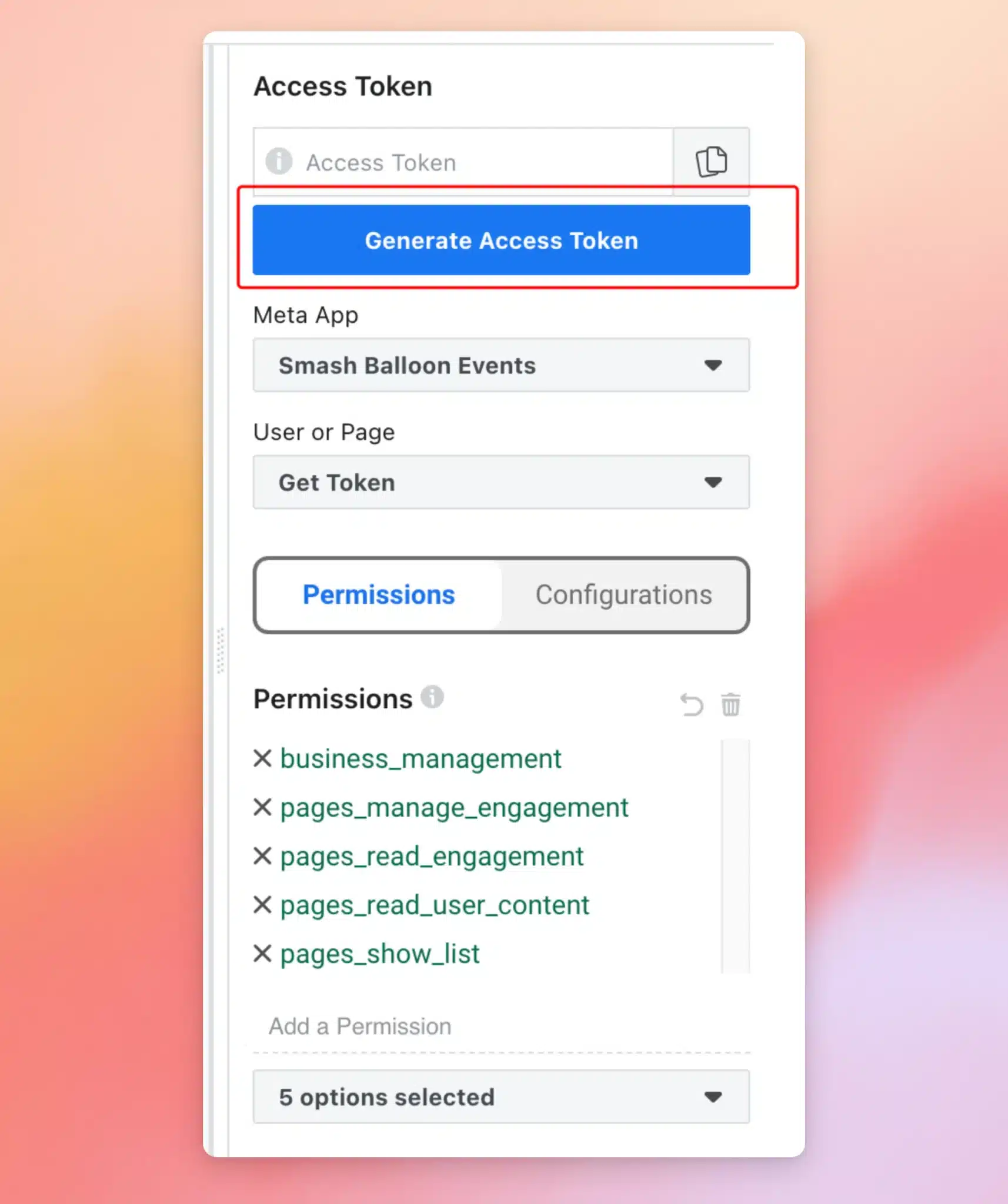
Next, open the Add a Permission dropdown and select all 5 permissions: business_management, pages_manage_engagement, pages_read_engagement, pages_read_user_content, and pages_show_list. The permissions you added earlier defined what your app is allowed to use. Selecting them here applies them to this specific token. That’s why all 5 need to be selected again, even though 2 came with the use case.
Before continuing, double-check that all 5 appear in the Permissions list. With the permissions in place, click Generate Access Token.
A Facebook login window then appears, asking whether to continue with the account you’re logged in as. If that’s the right account, click Continue.
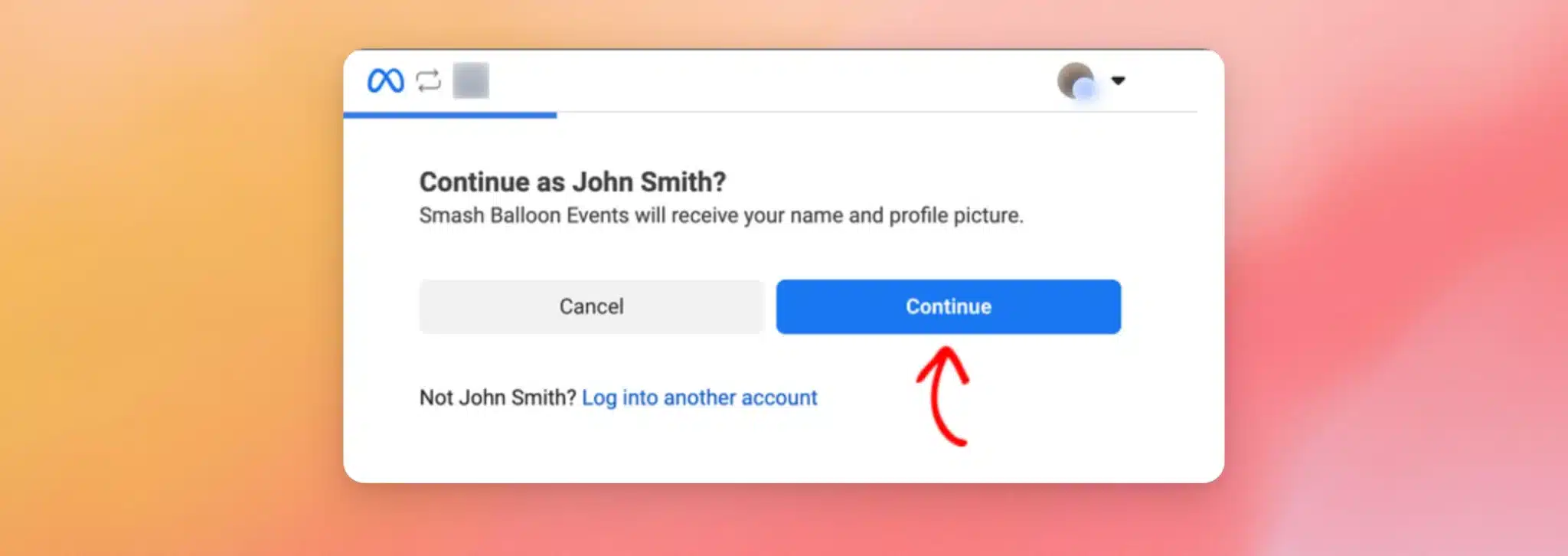
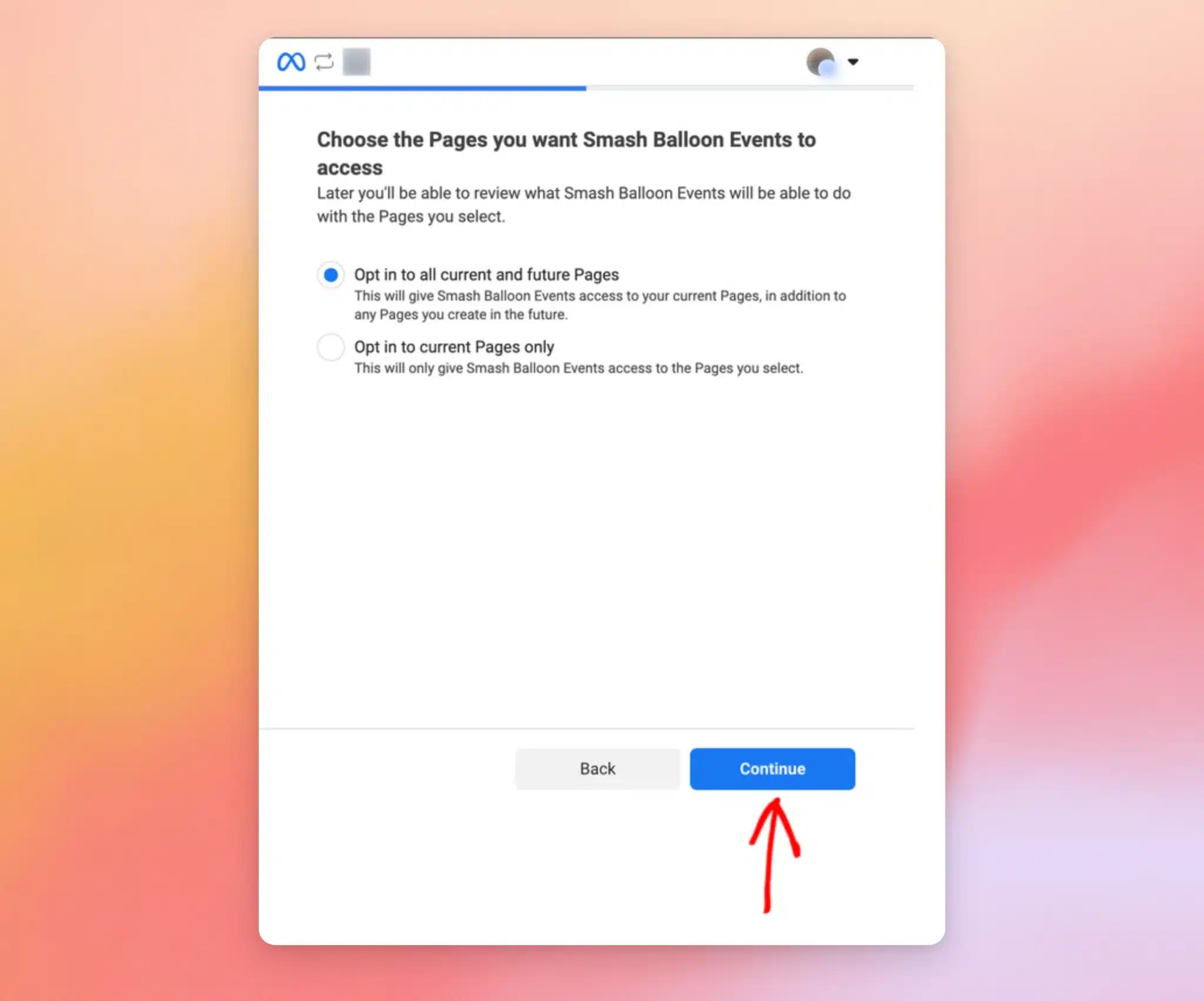
Facebook then asks which Pages and Businesses the app can access. The default option, Opt in to all current and future Pages, is the simplest choice. Any Page you create later is covered automatically, with no need to repeat this setup. You’ll see the same choice again for Businesses on the next screen.
If you’d rather keep the app’s access narrow, Opt in to current Pages only works just as well. With this option, include the Page whose events you want to display. The plugin lists only the Pages your token can access. You’ll need to repeat this setup to add a Page you create later.
After making your selection on each screen, click Continue.
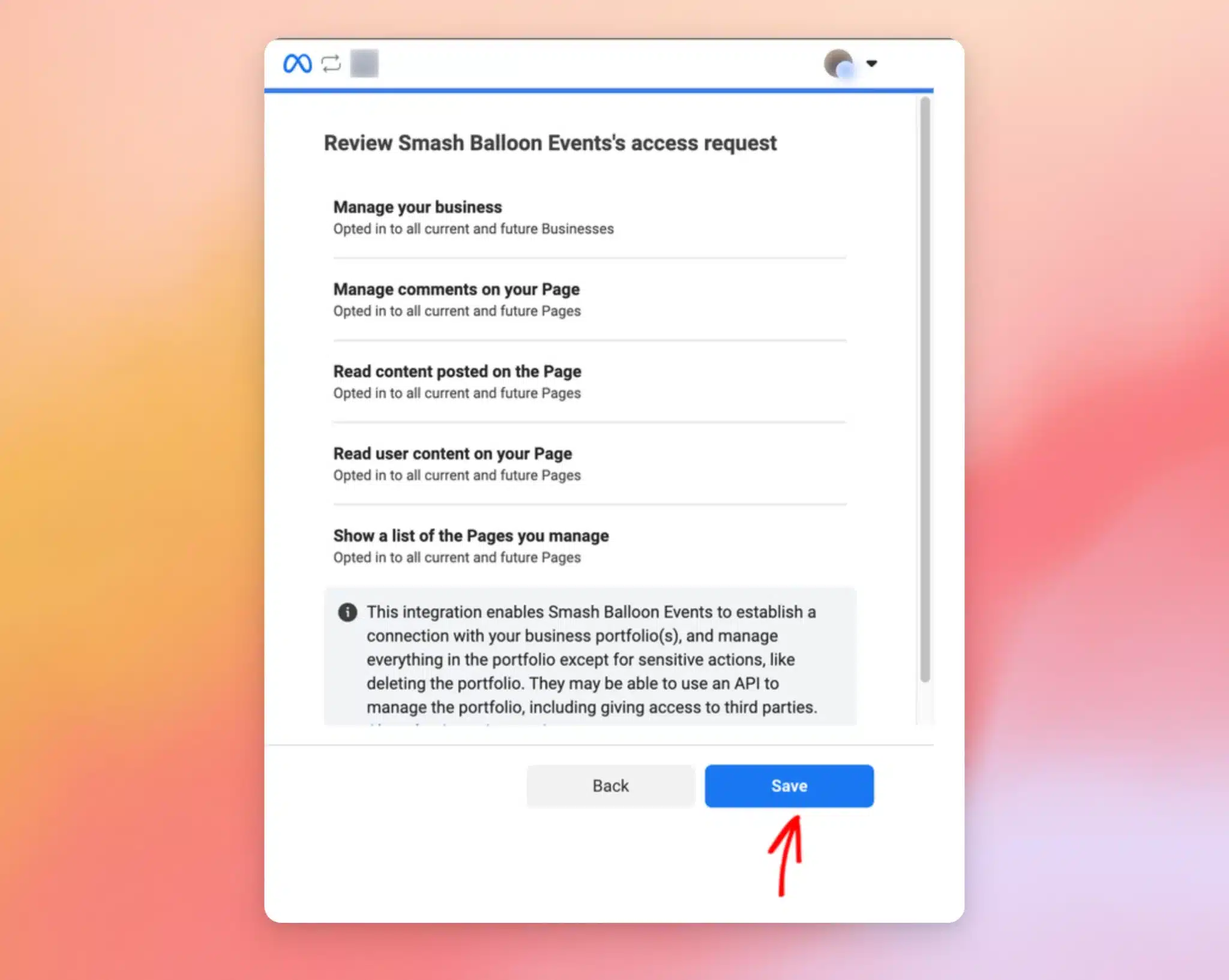
On the final screen, review the access summary and click Save.
The popup closes. Your new User Access Token appears in the Access Token field. Then, click the copy icon next to it to copy the token.
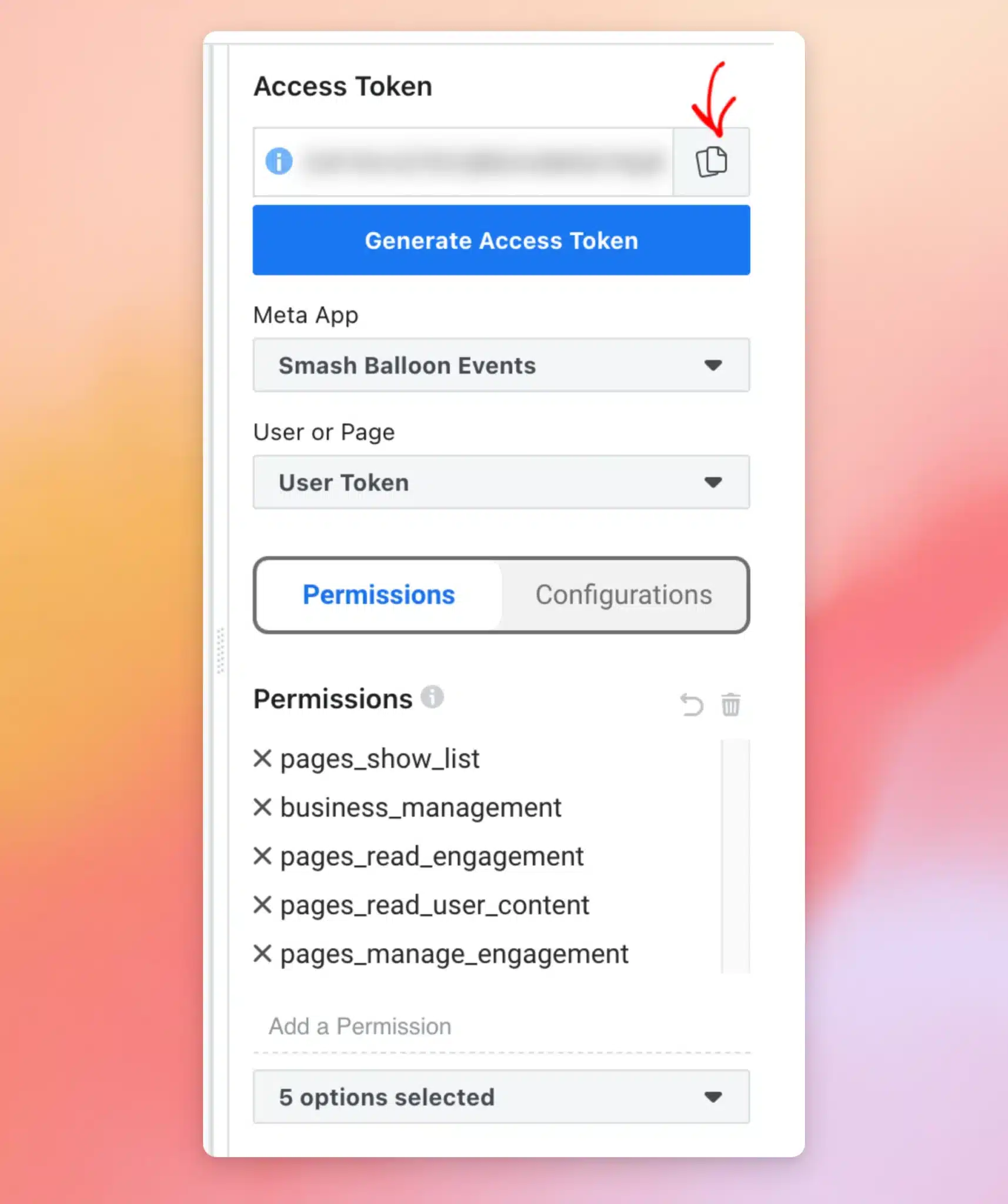
Note: This token is temporary and lasts about an hour, so paste it into the plugin in the same sitting. When you connect it, Custom Facebook Feed Pro exchanges it for a Page token that doesn’t expire.
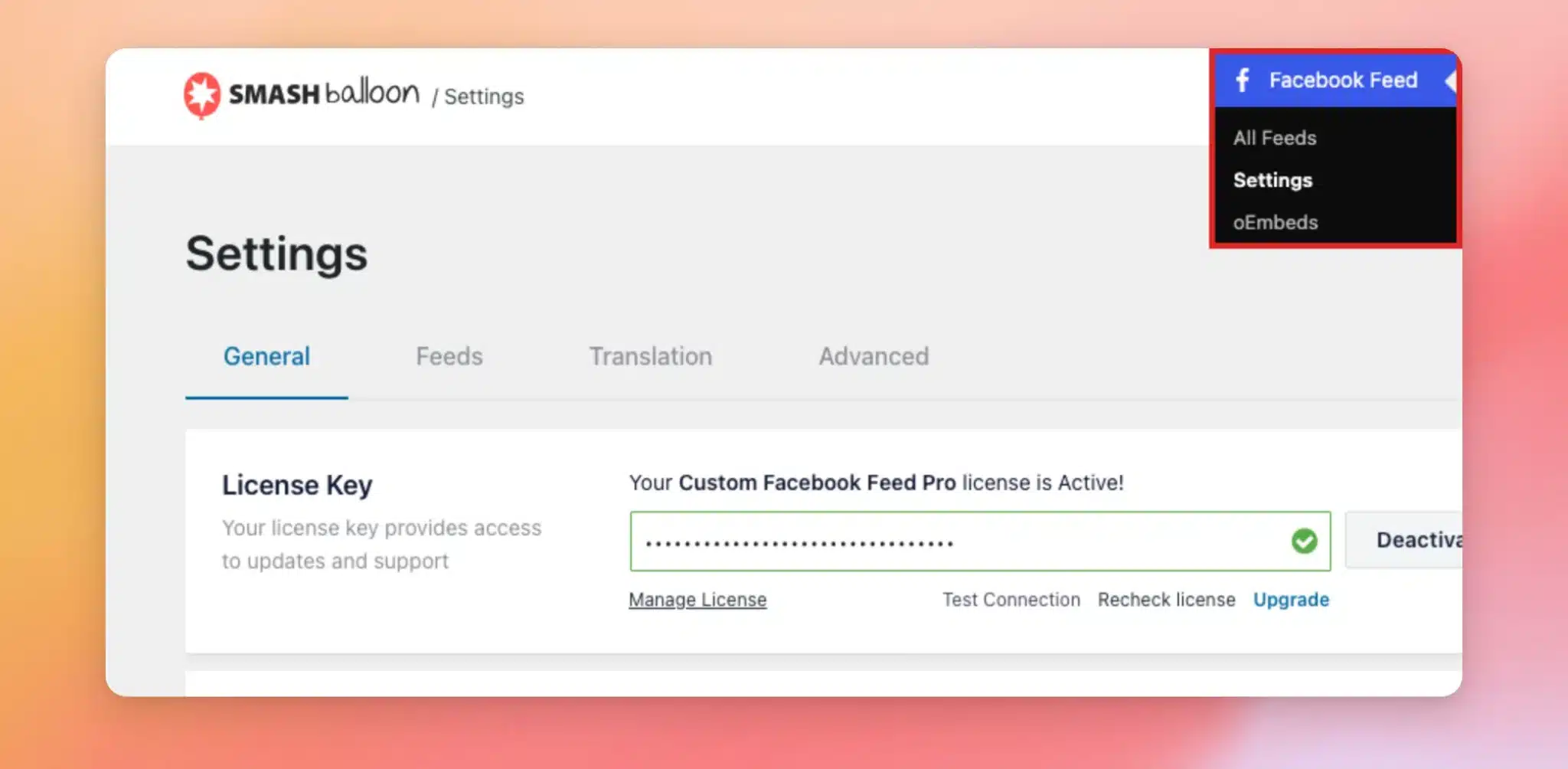
With your App ID, App secret, and token ready, head back to your WordPress site. In your WordPress dashboard, go to Facebook Feed » Settings.
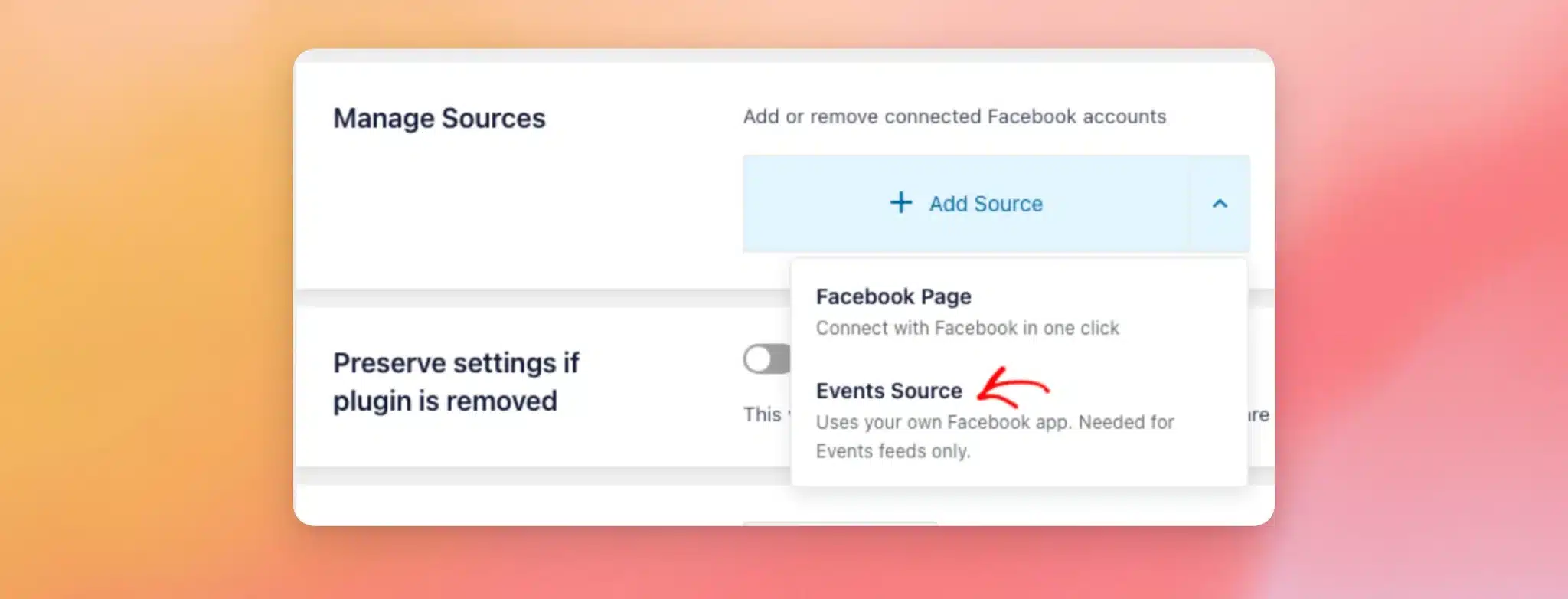
In the Manage Sources section, click the arrow on the right side of the Add Source button and select Events Source from the dropdown.
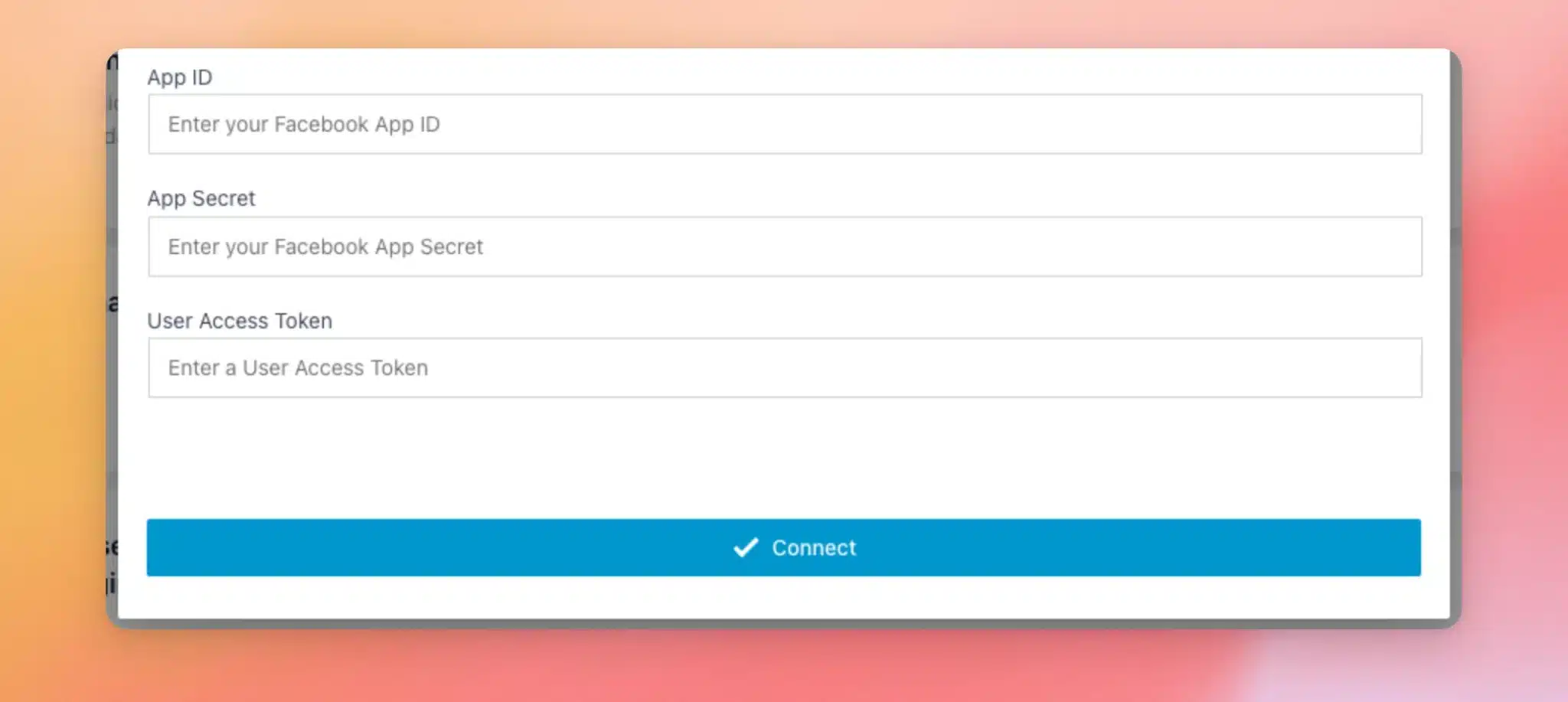
This opens the Connect an Events Source form.
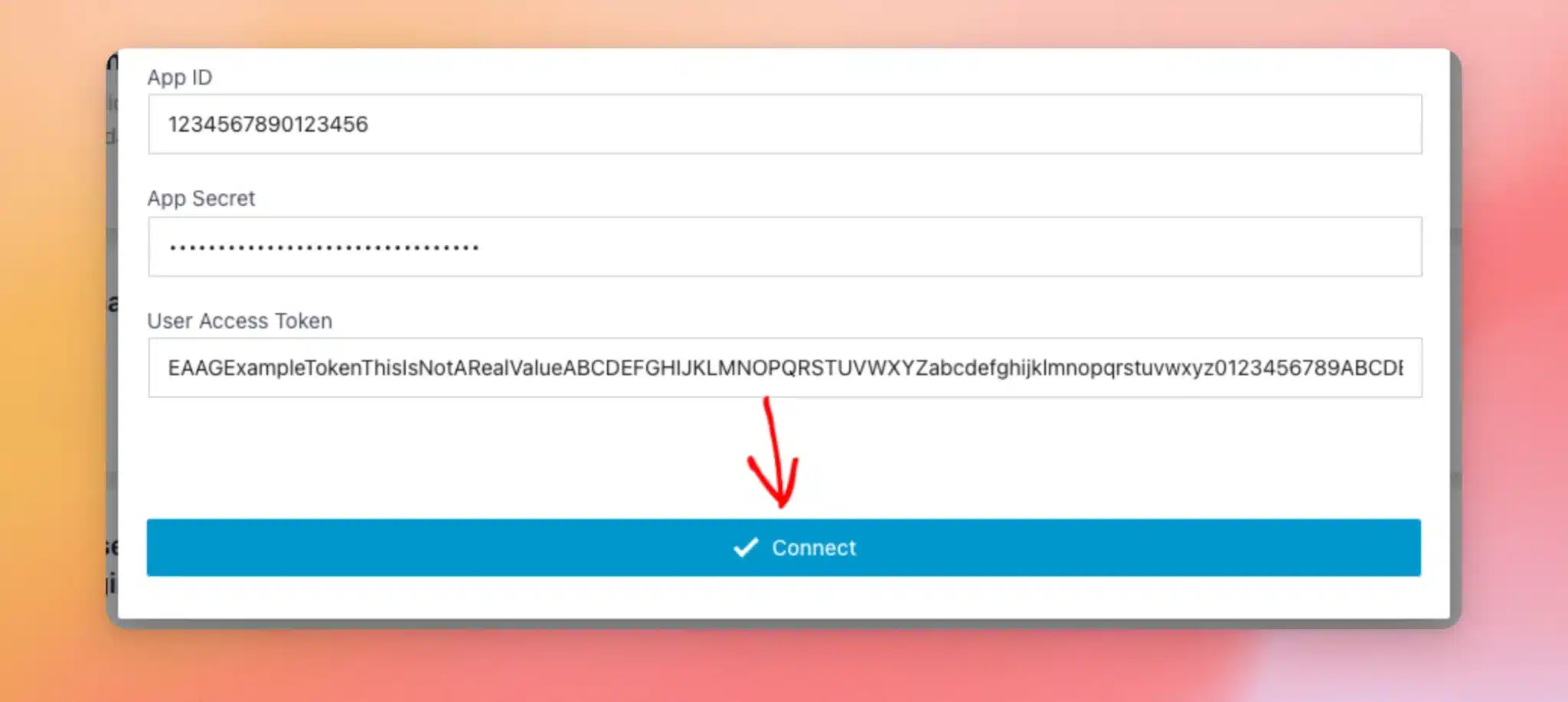
In the form, paste your App ID, App Secret, and User Access Token. Then, click Connect.
The plugin fetches the Facebook Pages you manage and lists them. From the list, select the Page whose events you want to display. Then, click Add.
Note: You must be an admin on the Facebook Page you want to display events from, otherwise no events will be displayed.
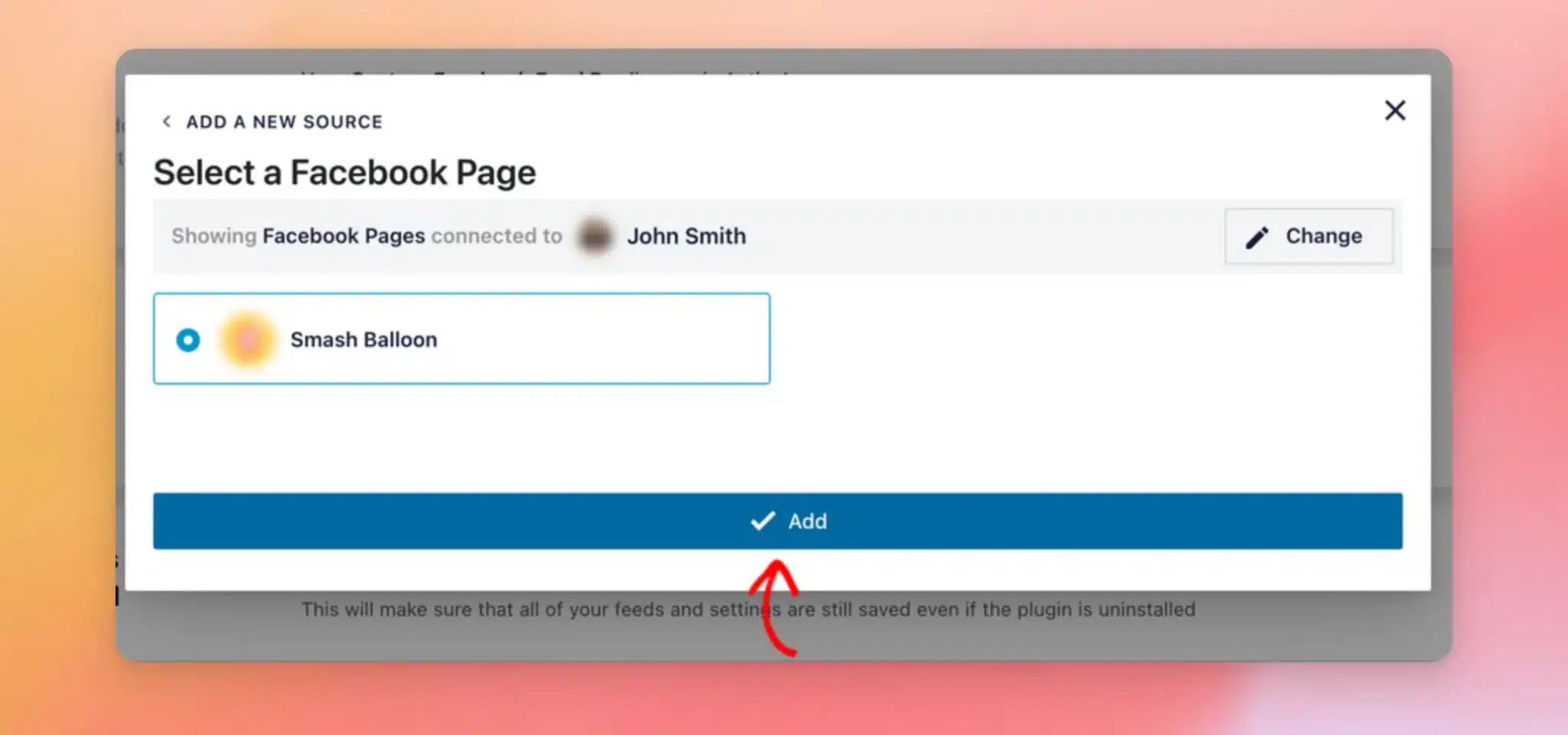
That’s all the plugin needs. Your Page now appears in the Manage Sources section as an events source.
Custom Facebook Feed Pro takes care of the token from here: it converts your temporary token into a Page access token that doesn’t expire. Your App ID and App Secret are not stored on your site.
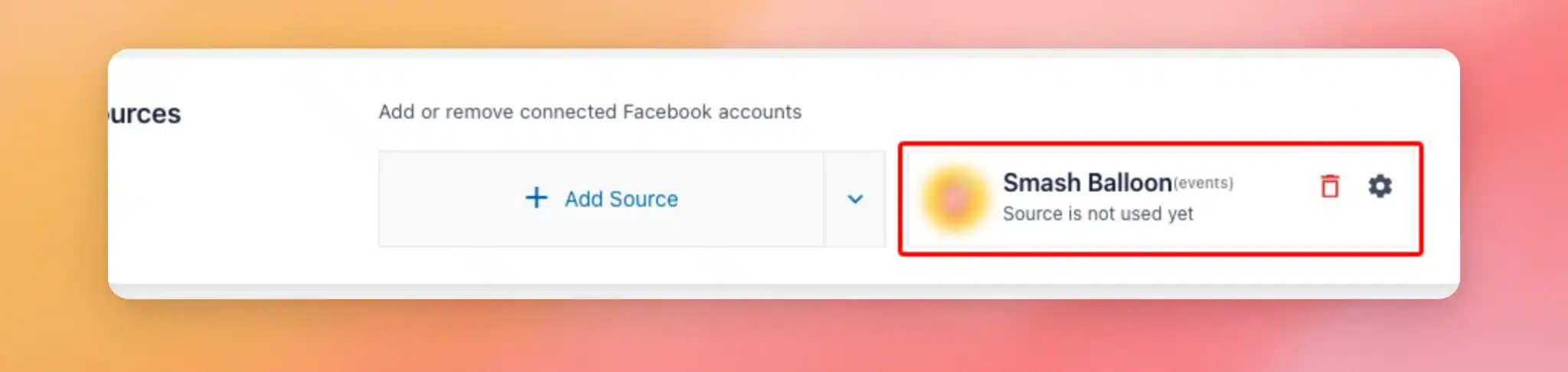
Once you see your Page listed here, the connection is complete. The source shows as not used yet because no feed is pulling from it. That’s exactly what we’ll set up next.
Your events source is ready to use. Let’s create your first events feed.
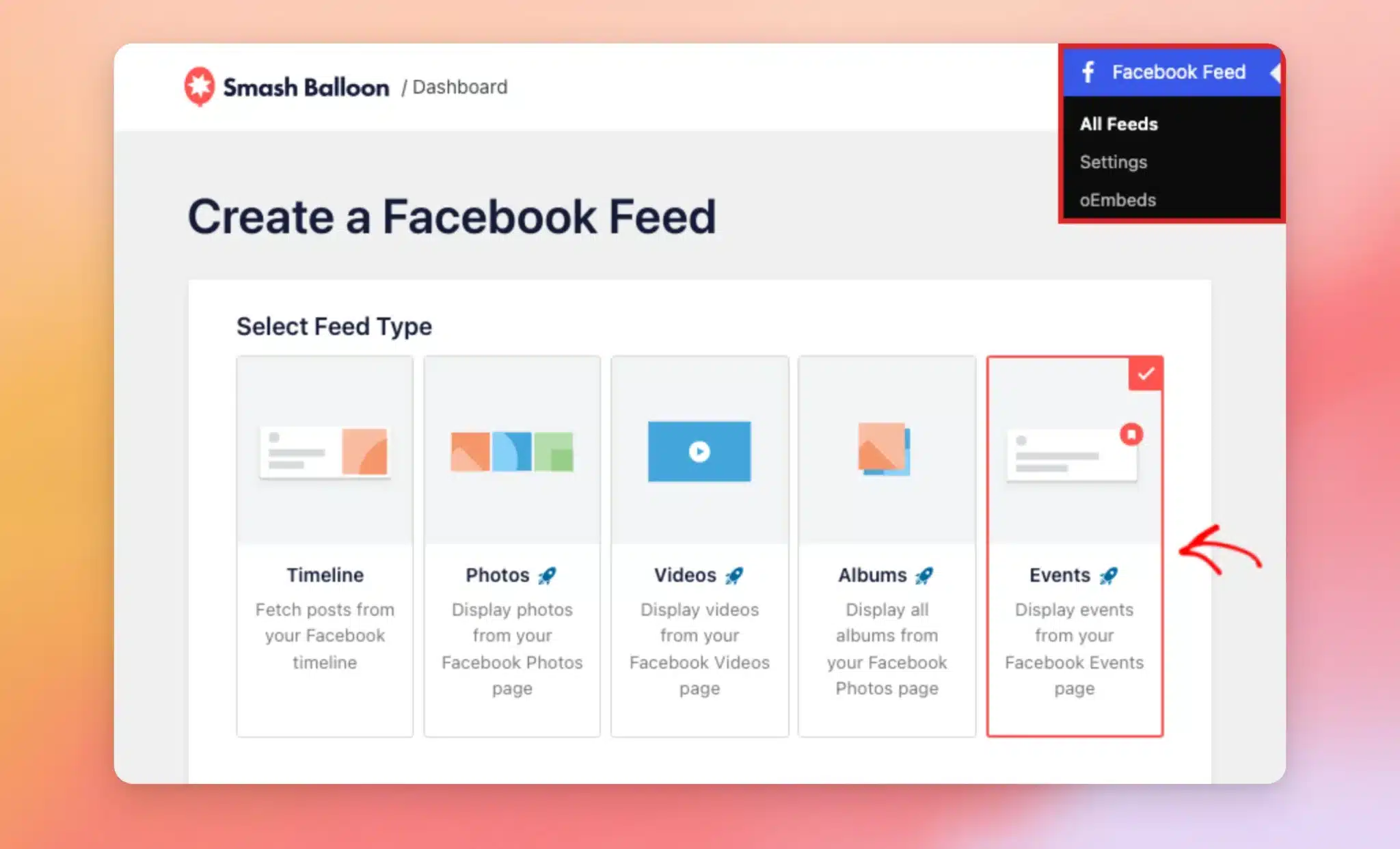
From your WordPress dashboard, go to Facebook Feed » All Feeds and click Add New. Then, select the Events feed type.
That’s it! Your Facebook Events source is connected, with nothing to renew later. Next, check out our guide on displaying Facebook events on your website for the full walkthrough of building and customizing your events feed.
Paste your Access Token from step 11 into the field below and click Extend my token.
Congratulations! You have successfully generated your Events Access Token. Getting an error or stuck? Check out our Troubleshooting section below or Contact Support.
If you’re receiving the following error message:
(#10) To use ‘Page Public Content Access’, your use of this endpoint must be reviewed and approved by Facebook. To submit this ‘Page Public Content Access’ feature for review please read our documentation on reviewable features: https://developers.facebook.com/docs/apps/review.
Then check the following three things:
- That you are an admin of the Facebook page you’re trying to display posts from
- That the app is in “Development” mode and not “Live”
- That you selected the correct app and Facebook page in steps 2.2-2.3 and 3.8
Frequently Asked Questions
Below, we’ve answered some of the most common questions about connecting your Facebook events.
Does my access token expire?
No. The token you generate in the Graph API Explorer is temporary. When you click Connect, the plugin exchanges it for a Page access token that doesn’t expire. You won’t need to renew anything manually.
Do I need to publish my Facebook app or submit it for App Review?
No. Your app can stay in Development mode. Since the app only reads events from a Page you manage, it works without App Review or publishing.
Which permissions does my app need?
Your app needs 5 permissions in total: business_management, pages_manage_engagement, pages_read_engagement, pages_read_user_content, and pages_show_list. The first and last are included automatically when you set up the Manage everything on your Page use case. The token you generate in the Graph API Explorer needs all 5 selected.
What does “No Facebook Pages were returned for this token” mean?
It means the token the plugin received can’t see any of your Pages yet. Generate a new token in the Graph API Explorer with all 5 permissions selected, especially business_management. When the popup asks, opt in to your Pages and Businesses. If you recently updated the plugin, reload the Settings page with a hard refresh before trying again.
I set up my events feed with an iCal URL. Do I need to change anything?
No. Existing events feeds that use an iCal URL keep working as they are. The Events Source connection described in this guide is how new events connections are set up.
Is my Facebook app information stored on my website?
Only the connected Page’s access token is stored, in encrypted form. Your App ID and App Secret are used once during the connection to retrieve your Pages and are not saved by the plugin.