Social Wall
 Feed Analytics


Search and hashtag feeds only reach the last 7 days, so the plugin keeps a longer store to show older posts.
Would you like to know why your database holds so many Custom Twitter Feeds caches and how to clean them up?
In this guide, we’ll explain where the plugin keeps these caches, why there can be many of them, and how to reset and turn off the Persistent Cache setting with the plugin’s own buttons. All you need is access to your WordPress dashboard.
Note: Persistent Cache applies only to Search and Hashtag feeds, which are part of the paid Custom Twitter Feeds plugin. Hashtag feeds need the plus license level or higher, and Search feeds need the elite license level.
Before you get started, make sure Custom Twitter Feeds Pro is installed and activated on your site.
- Where the Caches Are Stored
- Why There Are So Many
- Resetting the Persistent Cache
- Turning Off the Persistent Cache
- Frequently Asked Questions
Where the Caches Are Stored
The plugin keeps its saved copies of your feeds in its own database table, named ctf_feed_caches. WordPress adds your site’s table prefix in front of that name, so the table often shows as wp_ctf_feed_caches.
Each saved copy is a row in that table. Older guides may say they are in the wp_options table. The saved copies are in the ctf_feed_caches table.
Why There Are So Many
Every feed has a saved copy so your site doesn’t have to ask for your posts on every page load. Search and Hashtag feeds can also have a Persistent Cache. On the Advanced tab of Twitter Feed » Settings, the plugin says this setting “makes all Search and Hashtag feeds have a permanent cache saved in the database up to 150 tweets.”
Because these caches are permanent, a site with many Search or Hashtag feeds can build up a lot of them over time.
Resetting the Persistent Cache
If you don’t need to keep older posts in your Search and Hashtag feeds, you can reset the Persistent Cache. To get started, go to Twitter Feed » Settings in your WordPress dashboard. Then click the Advanced tab.
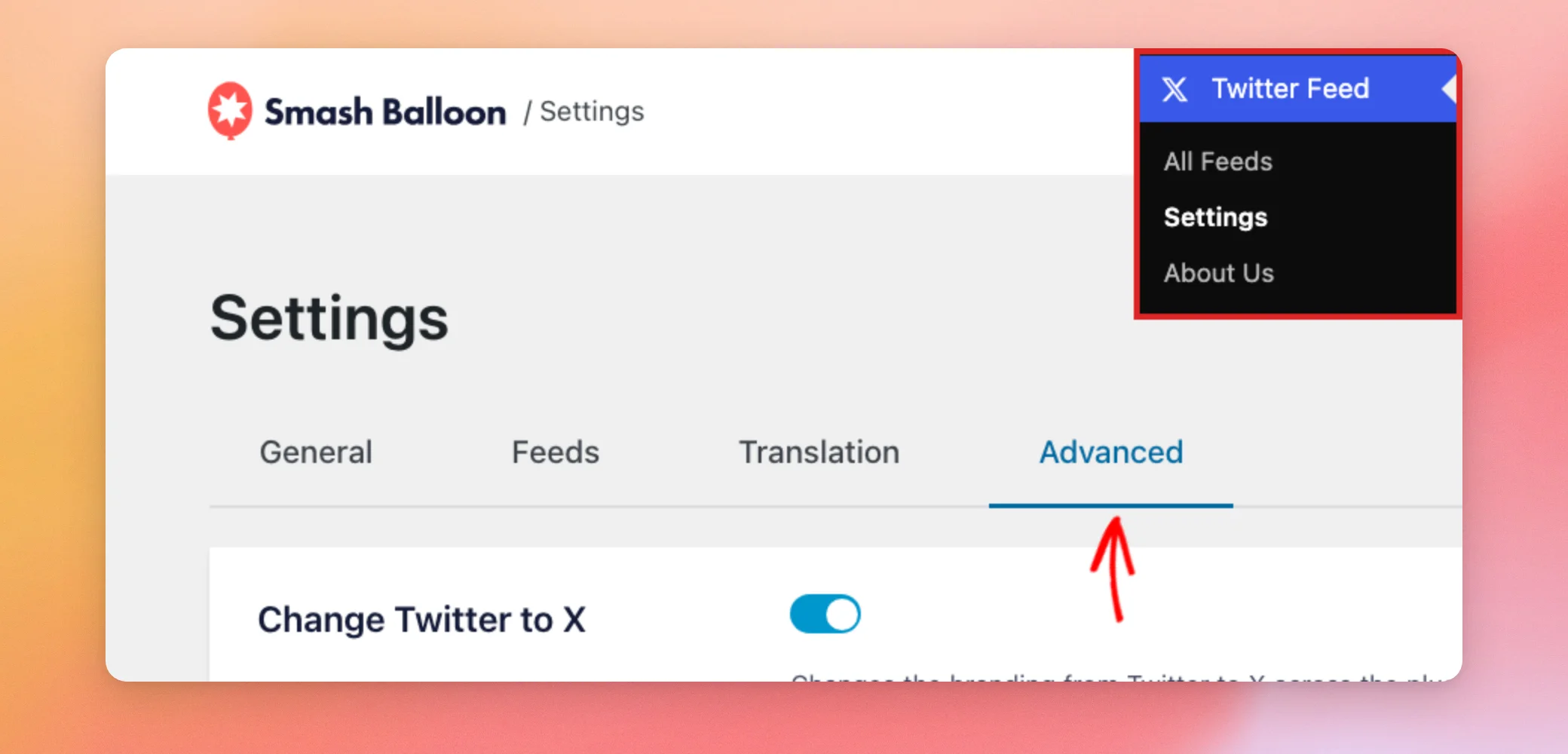
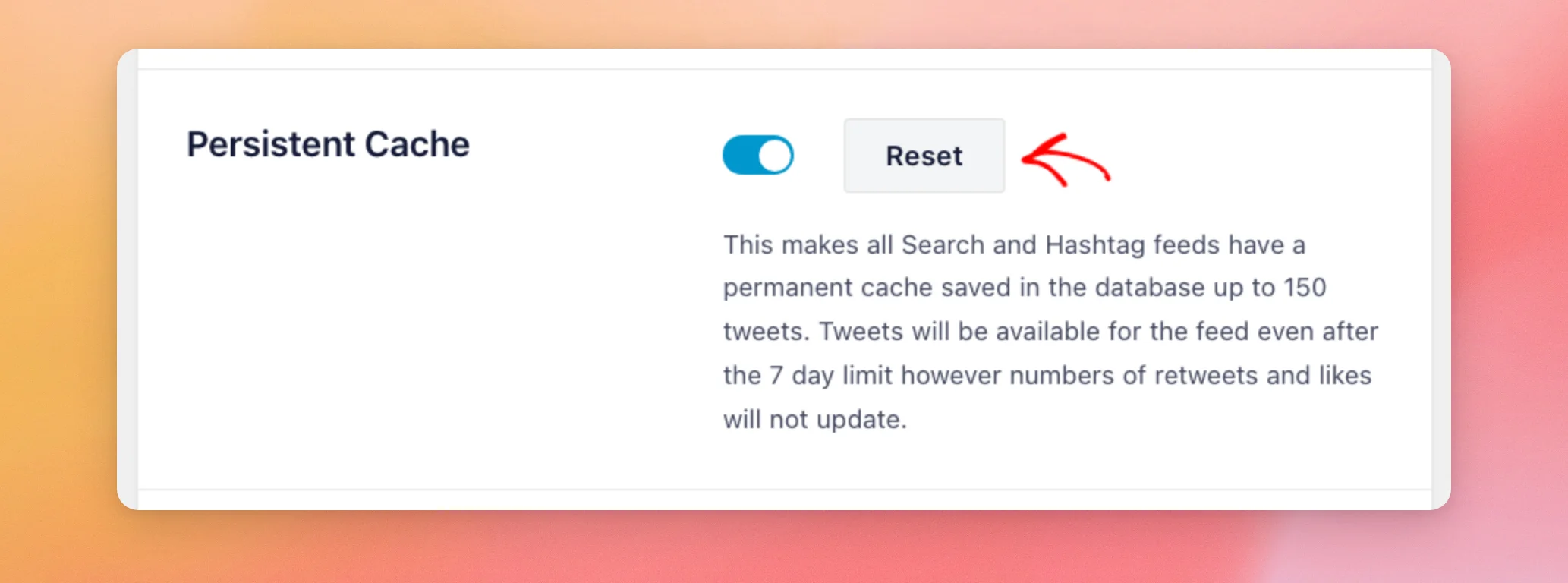
Next, find the Persistent Cache setting. Its Reset button has no confirmation step. As soon as you click it, it empties the saved copy of every feed in the ctf_feed_caches table. The rows stay in the table, but posts that were only kept there are removed.
When you’re ready, click the Reset button. A check mark appears on the button when it’s done.
Turning Off the Persistent Cache
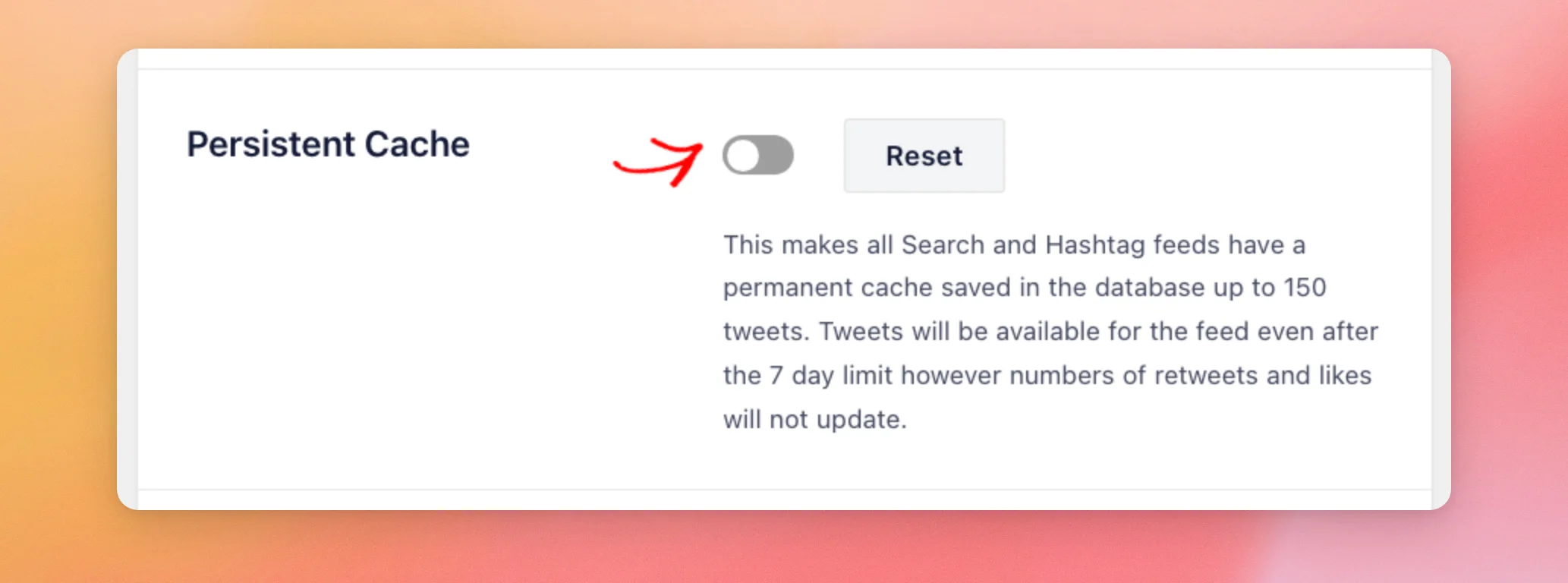
To stop your Search and Hashtag feeds from keeping posts long term, turn the setting off. On the same Advanced tab, click the switch next to Persistent Cache so it’s gray.
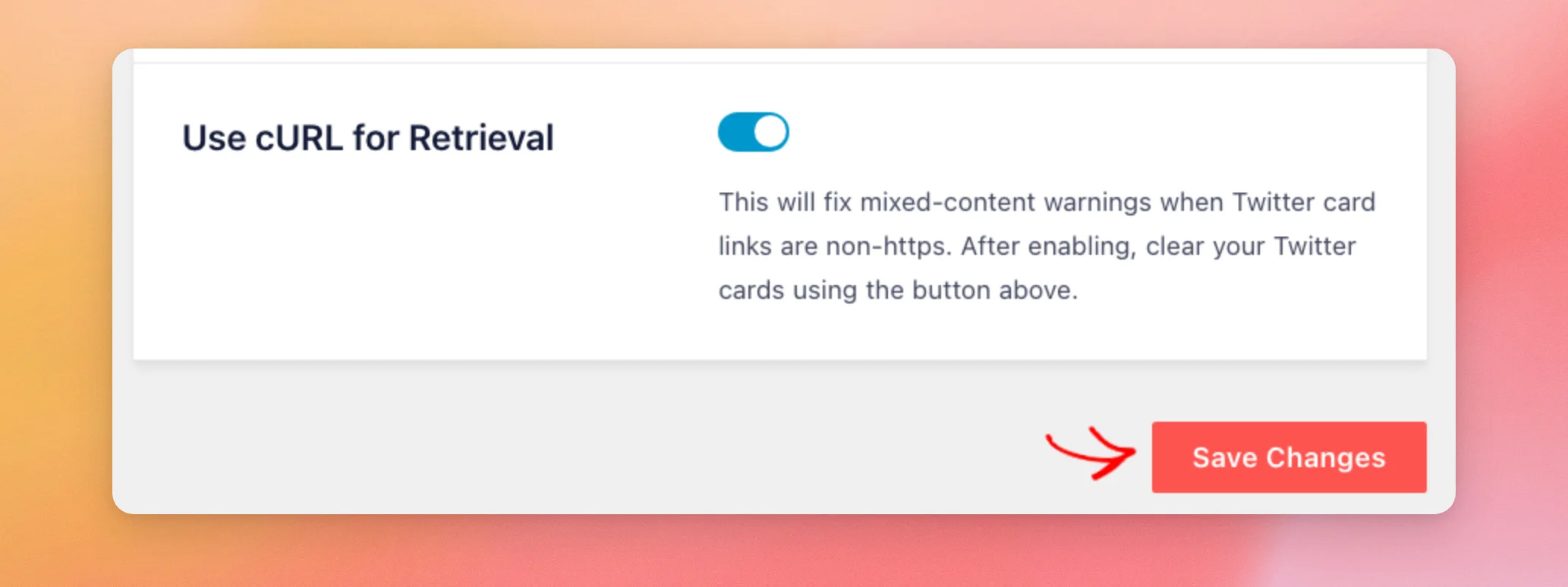
When done, click Save Changes.
With the setting off, your Search and Hashtag feeds no longer add posts to a permanent cache.
That’s it! You now know where the plugin stores its caches and how to reset and turn off the Persistent Cache. Next, check out our guide on building a Search feed to learn more about Search feeds.
Frequently Asked Questions
Below, we’ve answered some of the most common questions about feed caches in your database.
Will resetting the cache remove my feeds?
Your feeds stay in Twitter Feed » All Feeds. Reset only empties the saved copies of your feeds in the cache table. The feeds and the table’s rows stay.
When should I turn off Persistent Cache?
Turn it off only if you don’t need to keep older posts in your Search and Hashtag feeds. If you want those posts to stay available, leave the setting on.